
Vision Pro Needs Touch, Not Gestures
Vision Pro has a problem you'll discover after using it for a while. Your hands hover in mid-air, pinching and tapping. At first it feels cool, like a futuristic character from sci-fi movies. But after half an hour? Your hands get tired.
This isn't your problem—it's the interaction method's problem. Apple's eye-tracking plus gesture recognition has indeed turned science fiction into reality. But there's one thing it can't solve: tactile feedback.
When you're turning a screw, you need resistance. When you're drawing, you need the friction of the pen tip. When you're operating equipment, you need button feedback. Hovering gestures can't give you these things.
Recently, a company called DFRobot launched the seeMote series, physical input devices specifically for Vision Pro.
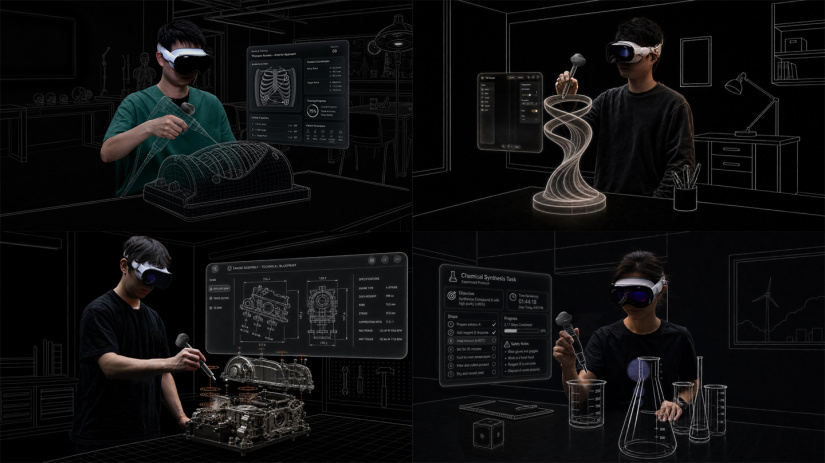
The seeMote series has two products. seeMote Cap is a tracking module that can be attached to physical objects. Where do you want to stick it? Screwdrivers, brushes, scalpels, wrenches... anything you want to "see" and "track" in the virtual world. It supports 6DoF (six degrees of freedom) tracking, which simply means the system knows where the object is, which way it's facing, and how it's moving. When you pick up a screwdriver in reality, the virtual screwdriver in Vision Pro moves with it.
seeMote Cube is a handheld controller. Besides tracking, it has 6 programmable buttons and haptic feedback. You can use it to select menus, switch modes, confirm operations, and feel vibration feedback. These two can be used separately or together.
What's Vision Pro's problem now? It's too "virtual." You can turn screws in the virtual world, but your hands can't touch the real screwdriver. You can draw on a virtual whiteboard, but your fingers can't feel the pressure of the pen tip. This leads to imprecise operation, unclear feedback, and unrealistic experience. What seeMote wants to do is bring back real tactile sensation.
Imagine a training scenario: A maintenance engineer wearing Vision Pro is learning how to repair complex equipment. A seeMote Cap is mounted on the screwdriver in his hand, and the system tracks his movements in real-time—is the angle right, is the force appropriate, is the sequence correct? The other hand holds a seeMote Cube, able to pull up drawings, confirm steps, and feel vibration feedback. This combines real operation with virtual guidance.
DFRobot's move reveals a signal: spatial computing is moving from "just looking" to "really working."
Gesture interaction is fine for viewing content, clicking menus, and doing demos. But for precision operations, complex workflows, and long tasks, it can't hold up. The value of physical input devices is that they bring decades of muscle memory and operational habits from the real world directly into the virtual world. You don't need to relearn "how to pinch and select"—you just pick up familiar tools and do familiar work.
The seeMote series targets the enterprise market: industrial training, medical simulation, lab teaching, design reviews. What do these scenarios have in common? They all need precise, reliable, realistic operational experiences. Medical training can't just "watch" surgical procedures—doctors need to actually touch instruments. Industrial maintenance can't just "watch" disassembly steps—engineers need to actually feel tool feedback.
Hovering gesture operations are indeed sci-fi. But when you're working, you need the reassurance of something solid in your grasp.
Will Vision Pro succeed? Hard to say. But one thing is clear: for spatial computing to go from "toy" to "tool," gestures alone aren't enough. You need entities you can grasp, feedback you can touch, resistance you can feel.
Accessories like seeMote are filling in this missing piece. Next, you'll see more similar products: spatial gloves, force-feedback controllers, physical input devices. This market is just getting started.
What does Vision Pro need most? Better displays, or more realistic tactile feedback?
分享文章
3篇相关文章
Apple Cancels Vision Air, This Isn't So Simple
2026-07-10
Apple is quietly abandoning its XR headset strategy, betting everything on AI glasses instead
No More Buffering When Watching NBA on Vision Pro: The Invisible Engine Powering 90% of Immersive Video
2026-06-29
When you watch games on Vision Pro, it's these invisible infrastructures that support visible dreams.
Diamond Substrates for Chip Base? Fudan and Peking University's Black Tech Could Make AI Glasses Say Goodbye to Heating
2026-06-29
Using diamond for chip bases sounds like sci-fi, but it could soon be reality.