
No More Buffering When Watching NBA on Vision Pro: The Invisible Engine Powering 90% of Immersive Video
No More Buffering When Watching NBA on Vision Pro: The Invisible Engine Powering 90% of Immersive Video
You put on Vision Pro, sit on the couch, and get ready to watch a Lakers game. This isn't just regular streaming – it's Apple Immersive Video, a 180-degree 3D view that makes you feel like you're courtside at Staples Center. The players' sweat, the crowd's cheers, the coach's shouts – they all surround you.
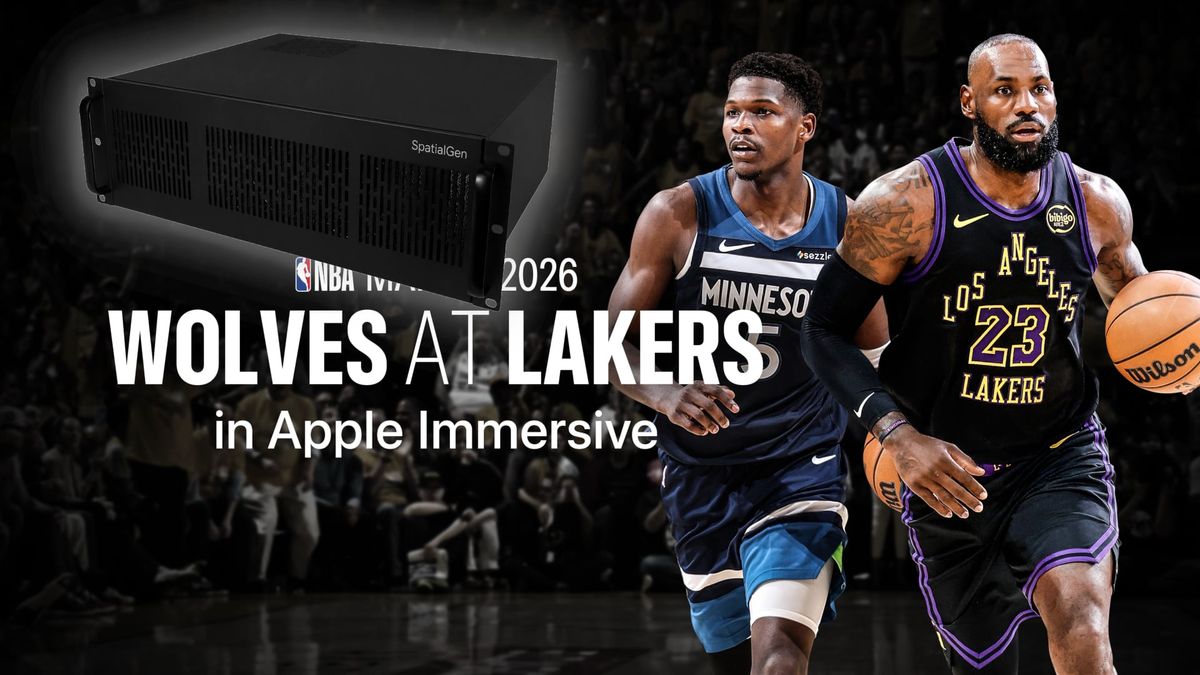
Then the screen freezes.
Vision Pro can display ultra-high-quality immersive video, but capturing, processing, and streaming that massive amount of data in real-time to your headset is genuinely a technical challenge.
Enter SpatialGen Zeus
Zeus is a rack-mounted system built specifically for live immersive video workflows. Think of it as a super-powered video processing server sitting in a broadcast room or production company's data center, quietly doing its job.
Its core mission? Four things: ingest, encode, package, distribute. It supports Apple ProRes video format, handling the entire complex pipeline from professional cameras to your Vision Pro.
Why Do We Need Such a Powerful System?
Look at the specs: 16K ingest (more than 4x regular 4K TVs), 90+ FPS (smoother footage, less motion sickness in VR), 100 Gb/s throughput. Data rushes in like a flood, and it has to handle it all.
Zeus supports various content delivery networks – AWS CloudFront, Azure, Google Cloud Platform, Akamai, plus SpatialGen's own network. No matter where you are, it finds the fastest route to get video to your eyes.
SpatialGen revealed at AWE that they stream over 90% of third-party immersive video on Vision Pro. They can even handle terabyte-level ProRes footage, including live immersive Lakers video for Spectrum Front Row.
Live Sports Streaming is the Best Proof
Apple and Spectrum have already brought some Lakers games to Vision Pro in Apple Immersive Video format, available through Spectrum SportsNet and the NBA app.
Traditional streaming apps can place 2D video in VR, and apps like Xtadium have already shown the appeal of immersive sports viewing. But Apple Immersive Video raises the bar – 180-degree 3D, high resolution, high frame rate, HDR, spatial audio. That quality is why Apple's format stood out from the start.
What Can It Actually Do?
Sports events: You can now "sit" in the best courtside seats instead of watching a fixed-angle view on TV
Concerts: You stand on stage looking at the audience instead of watching a recorded video
Ceremonies: Graduations, weddings, product launches – you feel like you're actually there, not watching through a screen
SpatialGen's goal is simple: simplify the complex path from professional cameras to VR headsets, done in real-time, without every production feeling like a technical experiment.
The Value of Invisible Infrastructure
Zeus isn't a product Vision Pro users will directly touch. But as live immersive concerts, sports, ceremonies, and events become more common on Vision Pro and other headsets, systems like Zeus are the invisible infrastructure making it all possible.
You don't care what a 5G tower looks like, but you care about the signal strength. Zeus systems work quietly in the background, making the frontend experience possible – you sitting in your living room but feeling like you're at Staples Center.
The Most Fascinating Part of Technology
The most fascinating part of technology isn't always the shiny hardware, but the invisible pipelines that make experiences possible.
SpatialGen Zeus is like an invisible high-tech pipe, cleanly delivering immersive "water" from the source to your home.
When we watch games, concerts, and the future on Vision Pro, it's these invisible infrastructures supporting visible dreams.
The next question isn't "how good of video can we stream," but "what kind of experiences can we create with this streaming capability?"
When technology becomes invisible, experience truly begins to emerge.
分享文章
3篇相关文章
Apple Cancels Vision Air, This Isn't So Simple
2026-07-10
Apple is quietly abandoning its XR headset strategy, betting everything on AI glasses instead
Diamond Substrates for Chip Base? Fudan and Peking University's Black Tech Could Make AI Glasses Say Goodbye to Heating
2026-06-29
Using diamond for chip bases sounds like sci-fi, but it could soon be reality.
VR in 2030 Won't Need Headsets: Leia's Answer
2026-06-25
If you think the future of the metaverse is everyone wearing bulky helmets, you might be wrong.