
AR Glasses' Biggest Weakness, Solved? This Self-Tinting Lens Might Be the Last Piece of the All-Day Wearing Puzzle
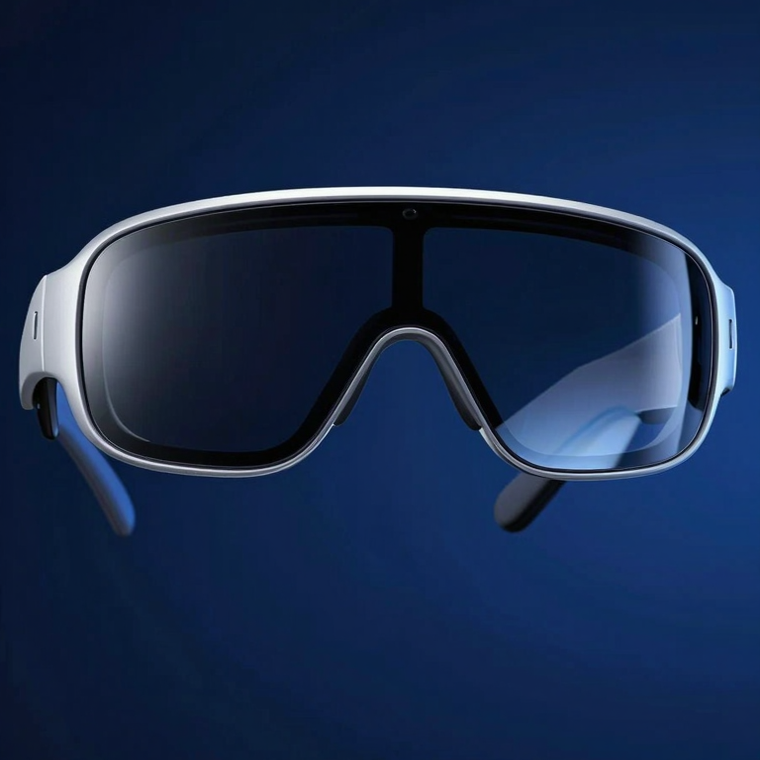
Quick question: have you ever seen someone wearing AR glasses while strolling under blazing sunlight?
Rarely, right. Here's why — it's not that people don't want to wear them. Step outside and strong sunlight instantly washes out the digital content on the display. No matter how powerful the chip or how bright the screen, the sun acts as an unstoppable "cheat-code" light source.
On November 25, Miru Smart Technologies, an electrochromic company based in Vancouver, announced a partnership with Biel Crystal, one of the world's largest glass component manufacturers, to turn electrochromic lenses into a mass-producible core component of AR glasses.
It sounds like a small thing. But I'd argue this might be the last piece of the puzzle for all-day smart glasses.
What Is Electrochromics? Sunglasses Built Into the Lens
Electrochromics, simply put, lets the lens put on sunglasses by itself.
The principle isn't mysterious. A special material layer inside the lens changes its molecular structure when powered, shifting the tint darker or lighter. You've probably seen this tech already: the windows on a Boeing 787 don't need shades — press a button and the glass turns deep blue.
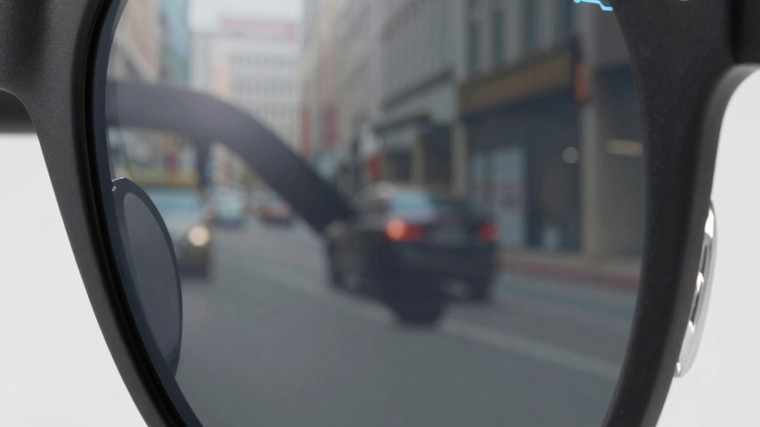
On AR glasses, this becomes essential. In bright outdoor light, the lens darkens automatically, blocking excess ambient light while keeping digital content readable. Back indoors, it quickly clears up — no more wearing a "sunglasses face" into a meeting. And tinting only draws power at the moment of switching; holding the state costs almost nothing, which is great for battery life.
Miru also stressed that their lenses are color-neutral and low-haze. In plain language: when tinted, they won't dye the world a weird blue-purple. You still see the world as it is.
Why This Partnership Matters: Two Words, "Mass Production"
Tech stories are everywhere. What I care about more is: who turns this into millions of lenses that sit on ordinary people's faces?
That's where Biel Crystal comes in. The name may not ring a bell, but the glass on your phone screen probably came off its production line. Biel is a leading supplier of precision glass components for smartphones and wearables, and one of Apple's core suppliers.

The division of labor is clear: Miru brings the electrochromic materials and lens design, Biel brings precision glass processing and manufacturing at scale. The two companies also plan to build a production-grade pilot line — first supplying lenses for customer evaluation and qualification, then paving the way for volume production.
Simon Yeung, VP at Biel, put it bluntly: "For smart glasses to work throughout the day, their displays need to stay readable as lighting changes. By combining Miru's dynamic light control with our precision glass processing, device makers can design dimmable lenses into their next products."
Miru's founder and CEO Curtis Berlinguette went further: "As personal computing moves from our hands into our line of sight, the lens has to keep both the display and the world around it clear. With Biel, we are building the manufacturing capability to deliver that experience across millions of devices."
Note the scale: millions. Not a few dozen engineering samples in a lab — this is aimed straight at the consumer market.
The Detective's Take: The Next Round of the Glasses War Is a Materials Science Fight
Zoom out, and this partnership says more than the announcement itself.
Over the past two years, the smart glasses race has been about chips, light engines, and AI models — Meta, Google, and XREAL keep making glasses lighter and smarter. Yet the counterintuitive fact remains: what keeps AR glasses indoors is often not the most expensive component, but the least noticed one — the lens itself.
When the hardware spec race nears its ceiling, the real breakthroughs tend to hide in materials science. Electrochromics is one; waveguides are another. More "invisible technologies" will decide who wins.
A cold shower, though: between a pilot line and million-unit mass production stand yield, cost, and customer qualification — three mountains. Announcements and products usually sit 18 to 24 months apart. Don't rush to open your wallet, but do put this lens on your watchlist.
One last question: if a pair of glasses could adapt to every lighting condition automatically while looking just like ordinary eyewear — how long could the phone in your pocket keep its throne as humanity's primary terminal?
分享文章
3篇相关文章
How Will the AI Glasses Battle Play Out? Cellid, XREAL and Qualcomm Gave the Same Answer in Tokyo
2026-11-25
XR Kaigi 2026 opens next week, and three keynote speeches point to the same judgment: the deciding factor for AR glasses has shifted from display tech to AI ecosystems.
AR Glasses Too Crowded on the Street? These HIT Graduates Dove Into the Ocean and Raised 7 Million in Crowdfunding
2026-11-17
While every vendor fights for your face on the street, Xingyu Weilan put AR displays into a dive mask and found its blue ocean underwater.
Meta Plays Three Aces: Apps Can Float in Space Without a Rewrite, Disney+ Takes the First Bite
2026-10-21
Meta VR Glasses haven't shipped yet, but Meta is already laying the foundation of its developer ecosystem. This time, 2D apps grow spatial bones.