
AR Glasses Too Crowded on the Street? These HIT Graduates Dove Into the Ocean and Raised 7 Million in Crowdfunding
Friends, no need for me to tell you how crowded the AI glasses track is in 2026. Street snaps, commutes, meetings — camera-equipped temples are sprouting on eyewear all over the world.
In this red ocean, a young company called AREX (星域蔚蓝) turned the other way. Downward, all the way to the bottom of the sea.
News on November 16: the company just completed a tens-of-millions-of-yuan angel+ round, with Hunan Caixin as the investor. The product numbers are even more striking: its first AR dive mask, AREX ONE, has surpassed 7 million HKD in crowdfunding.
Why are divers paying real money for a $999 mask that won't ship until next year?
Divers' Necks Have Suffered Enough
First, a scenario every diver knows.
During a scuba dive, your depth, tank pressure, and decompression time all live on the dive computer on your wrist. Want to check the data? Look down, raise your wrist, squint. Every repetition underwater costs you a bit of environmental awareness — and adds a bit of risk.
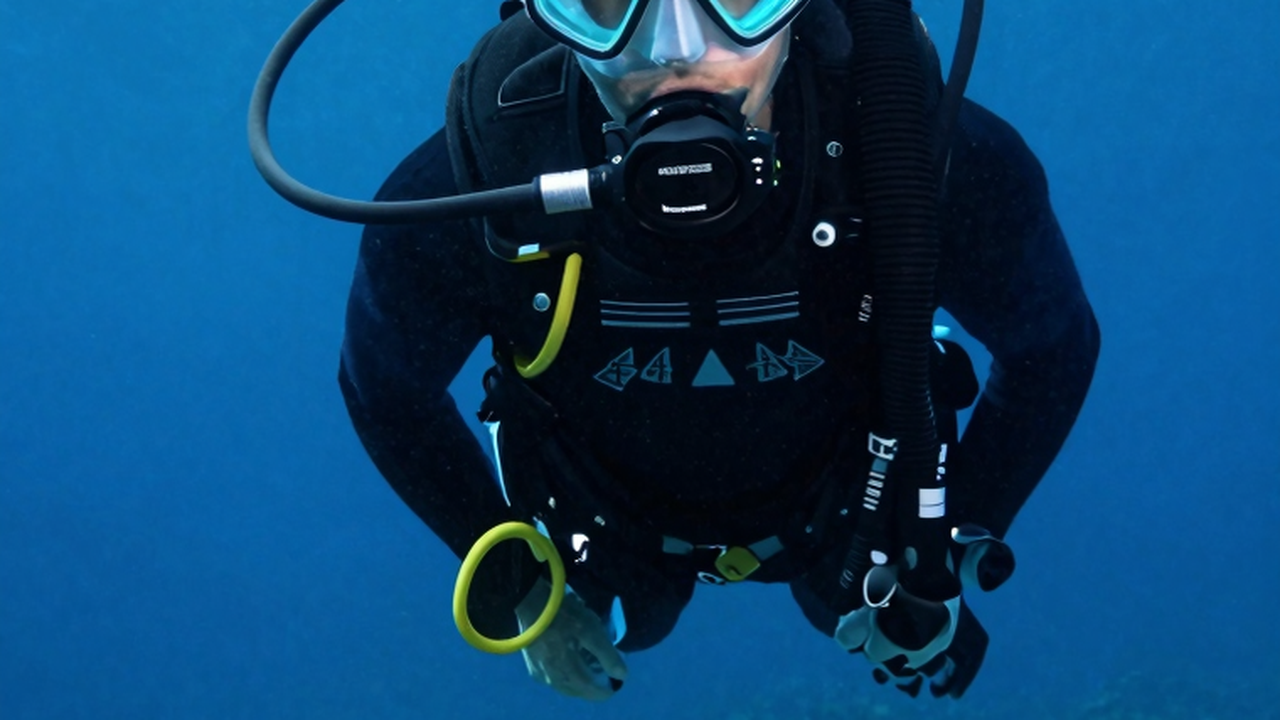
What AREX ONE does can be said in one sentence: it projects the dive computer's information directly into your field of view. Data floats in your line of sight while your eyes stay on the coral and your dive buddy.
This is AR at its most primitive and purest — information appearing exactly where you need to see it. Street AR glasses can't pull this off; this mask underwater does.
Monochrome Only? That's Smart Restraint
Someone will ask: isn't full-color AR the industry trend? Why did this mask go monochrome?
Let me translate the product logic: what divers need to read is numbers and curves — depth, pressure, decompression time. Monochrome is enough; full color is waste. The saved cost and power all go into underwater reliability.
Underwater is also naturally suited to AR displays: buoyancy offsets the device's weight, and dim ambient light actually makes displayed content easier to read. The two biggest headaches for street AR glasses — weight and brightness — the ocean solves by itself.
The company was founded only in 2025. Founder Wang Jingpan comes from Harbin Institute of Technology's automation program and won a RoboMaster championship; co-founder Chen Rui researches AR human-computer interaction. A group of robotics-savvy young people picking a vertical scenario the giants overlook — a textbook startup position.
The Mask Is the Entry Point; the Dive Log Is the Business
Even more interesting is its commercialization roadmap.
The team plans to pack the software with underwater marine life recognition, dive video recording, a marine species guide, and dive site maps. Every dive automatically compiles into a personal dive logbook.
See it yet? Selling the hardware at $999 is just the opening move; paid software services are the recurring revenue. Tens of millions of certified divers worldwide — every dive is data, every dive site is content. It resembles GoPro's old playbook, with AI and AR layered on top.
The Detective's Verdict
The AR industry has spent years arguing one question: in everyday life, why would anyone wear AR glasses? There's still no standard answer.
AREX's answer: stop fighting over daily life — go find the scenario where it's unavoidable. You can't check your phone underwater, paper tables don't update in real time, and the dive computer is a born candidate for replacement.
The challenges are obvious, though. Dive gear sells safety, and safety means trust built on time and certifications. Convincing veteran divers is a far higher threshold than $999. Crowdfunding closes November 21, delivery is expected in 2027 — the real test comes after that.
But the direction itself is worth remembering: while every screen fights to grab your eyes upward, someone found their market ten meters below the surface.
Sometimes the blue ocean isn't far away. It's just beneath the waterline.
分享文章
3篇相关文章
Meta Plays Three Aces: Apps Can Float in Space Without a Rewrite, Disney+ Takes the First Bite
2026-10-21
Meta VR Glasses haven't shipped yet, but Meta is already laying the foundation of its developer ecosystem. This time, 2D apps grow spatial bones.
Iron Man Joins Snap: Robert Downey Jr. Becomes Chief Customer Experience Officer for AR Glasses SPECS
2026-10-21
A man who has tried two decades of wearables was convinced by one pair of glasses in 40 seconds.
Lamborghini Redefines Car Showrooms with Vision Pro, But You're Still Sitting in a Fake Car
2026-07-10
When technology lets you own everything in the virtual world, will you still pay for material possession in reality?