
Lamborghini Redefines Car Showrooms with Vision Pro, But You're Still Sitting in a Fake Car
Lamborghini Redefines Car Showrooms with Vision Pro, But You're Still Sitting in a Fake Car
Friends, today the Detective wants to discuss something counterintuitive—when you spend $3,500 on a Vision Pro, and Lamborghini lets you "sit in" a multi-million dollar sports car for free, who's really losing out?
This Italian supercar brand just launched a free Apple Vision Pro app that brings four rare models directly into your living room.
This Isn't Viewing Cars, It's "Invading" Your Living Room
In plain terms, this Lamborghini app can do four things:
Park the car in your home. Four models—Temerario, Revuelto, Urus SE, and the upcoming Urus SE Performante—appear before you at 1:1 actual size.
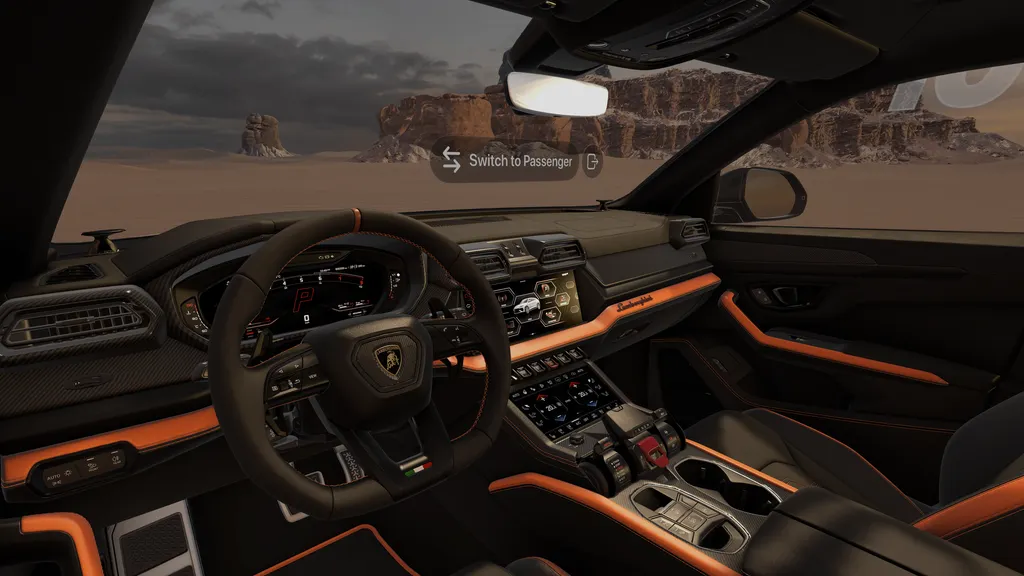
Let you sit inside. Not just clicking on a 3D model to see the exterior, but actually "sitting" in the driver's seat, seeing interior textures, control buttons, even hearing the engine roar.
Tell you stories. Each car has voice narration with text subtitles explaining what makes it special.
Make you think you can open the door. When the Detective tried it, I instinctively reached out to pull the door handle—of course, it wouldn't open, because this is just a virtual experience.
But the experience is realistic enough to create an illusion: the car is right in front of me, I can drive it away anytime.
Great Tech, But Missing the Story
So the question is: why did Lamborghini build this?
Officially, it's to "redefine how enthusiasts and collectors connect with the brand" through an "immersive digital journey" to experience Lamborghini's "new dimension."
Translation: let you have a blast in the virtual world before you buy the car.
But the Detective thinks this app has even more potential.
The current version focuses more on showcasing technical details and specs. You learn what materials the car uses, what features it has, how the engine sounds—but what truly makes Lamborghini compelling has never been these cold, hard numbers.
It's that moment driving on Italian country roads, engine roaring, sunlight hitting the bodywork.
It's that dream that made countless teenagers put posters on their bedroom walls.
These stories are missing from the app.
When Luxury Brands Embrace Spatial Computing
This is actually quite interesting.
Lamborghini isn't the first luxury brand to do this. Other luxury brands have used VR/AR for displays and marketing.
But Vision Pro is different—it provides unprecedented "realism." When you "sit" in that Revuelto, seeing the steering wheel texture, dashboard reflections, seat leather quality, your brain actually believes you're there.
This experience is far more powerful than looking at 100 ads.
For Lamborghini, this isn't just a marketing tool.
When you've already "owned" a Lamborghini in the virtual world, that final step to order in reality becomes much easier.
One Step Remains
But the Detective thinks this app could go further.
The current version is more about "display" than "storytelling."
If it could transport you to Lamborghini's design studio, watching engineers polish every detail;
If it could put you in the driver's seat, speeding on Italian mountain roads, feeling wind pressure, acceleration, cornering forces;
If it could help you understand why this car sells for millions—instead of telling you what materials it uses and what specs it has.
Then it wouldn't just be a marketing app, but a dream-making machine.
One Last Question from the Detective
The essence of spatial computing is integrating virtual content into the real world.
Lamborghini's attempt with Vision Pro already demonstrates this possibility: future car displays won't require flying to auto shows, scheduling dealer visits. You just put on glasses, and the car appears in your living room.
So friends, when technology can let you "own" everything in the virtual world, will you still pay for material possession in reality?
Or, when virtual experience becomes realistic enough, will the definition of luxury shift from "owning" to "experiencing"?
The answer may arrive sooner than you think.
分享文章
3篇相关文章
AR Glasses' Biggest Weakness, Solved? This Self-Tinting Lens Might Be the Last Piece of the All-Day Wearing Puzzle
2026-11-25
AR glasses fail outdoors not because the chips are weak, but because sunlight washes everything out. Miru and Biel Crystal are teaming up to fix exactly that.
How Will the AI Glasses Battle Play Out? Cellid, XREAL and Qualcomm Gave the Same Answer in Tokyo
2026-11-25
XR Kaigi 2026 opens next week, and three keynote speeches point to the same judgment: the deciding factor for AR glasses has shifted from display tech to AI ecosystems.
AR Glasses Too Crowded on the Street? These HIT Graduates Dove Into the Ocean and Raised 7 Million in Crowdfunding
2026-11-17
While every vendor fights for your face on the street, Xingyu Weilan put AR displays into a dive mask and found its blue ocean underwater.