
Meta Plays Three Aces: Apps Can Float in Space Without a Rewrite, Disney+ Takes the First Bite
At Meta Connect 2026, Meta announced three new SDKs in one go: the VR Layout SDK, the Gaze SDK, and the UI Set SDK.
Sounds like routine developer-conference business? After reading through everything, I'll just say this: Meta is playing a long game. It wants millions of existing Android apps to float into the spatial computing era without rewriting their core code.
2D Apps Have Always Been Stuck in "Tablet Mode"
On Horizon OS, traditional Android apps have lived inside a tablet-style window. You could open multiple windows, but if you wanted UI elements to float outside the window and hang in space, you either put up with it or rebuilt the whole app as an immersive experience with the Spatial SDK. That barrier kept out most everyday developers.
The VR Layout SDK changes the game.
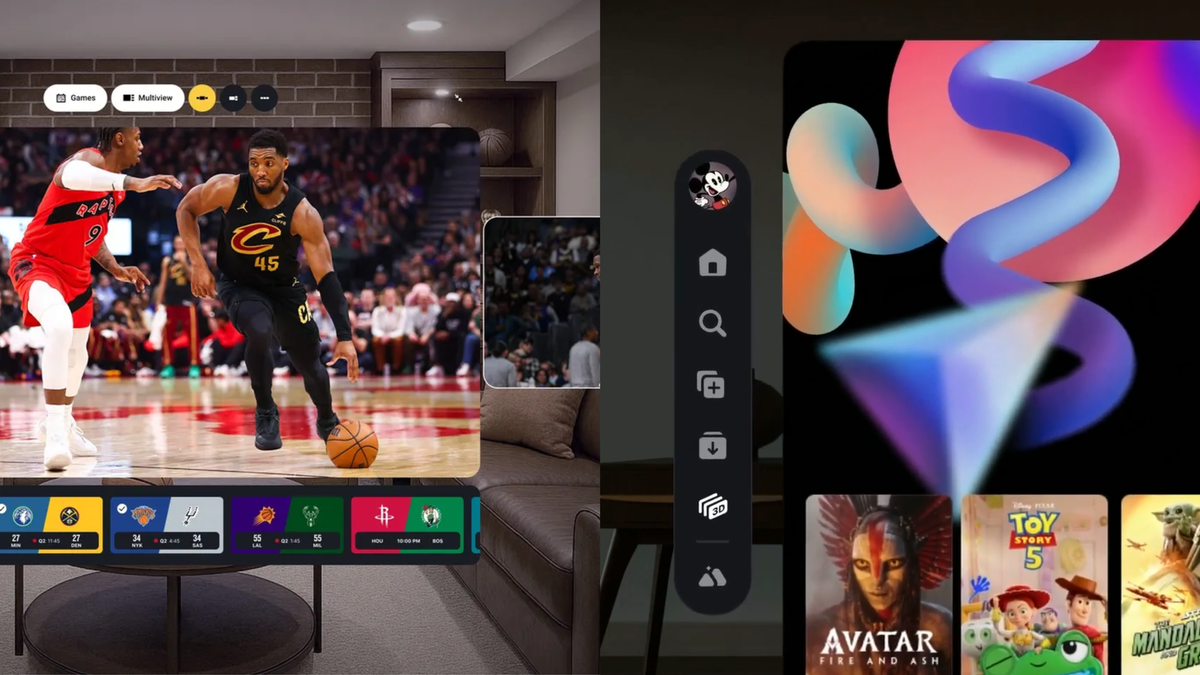
A standard Android app written in Jetpack Compose or React Native can now add spatial components and spatial windows around its main window. The app itself remains non-immersive, coexists with other open apps, and keeps its existing architecture untouched. In plain terms, Meta brought visionOS-style multi-window spatial layouts to Horizon OS, at a very low cost.
The NBA app is the first to take the plunge, using the Layout SDK to rebuild its interface with multi-view support for game data and video at the same time.
A bucket of cold water, though: the Layout SDK only arranges windows. It can't spawn 3D objects or control the environment. That "plant a tree in your room" magic still requires the Spatial SDK. Meta has split the barrier into two steps: enter cheap with Layout, go deep with Spatial.
Gaze SDK: Making "Look and Pinch" More Obedient
Meta VR Glasses default to a "Look and Pinch" input scheme — look where you want, pinch to click, powered by eye and hand tracking. It's elegant, but for heavily customized UI components, the system may not recognize what's tappable.
That's what the Gaze SDK is for. Developers can give the system hints about which elements should respond to gaze selection, and customize hover behavior. It's in early access; developers need to request it through the developer support portal.
When the grammar of interaction shifts from "precise mouse clicks" to "your gaze is the cursor," the entire methodology of UI design has to be rewritten.
UI Set SDK: Ending the "Every App, Its Own Aesthetic" Chaos
Another update that's easy to overlook but far-reaching: the Meta VR UI Set SDK.
On Quest, every app's interface has looked different, because Meta never offered an official UI framework for standard 2D apps. Developers bought components from Unity asset stores or rolled their own.
The new UI Set SDK is a Jetpack Compose design system with color schemes, typography, icons, component dimensions, and interaction feedback all preconfigured. More interesting: Meta specifically says the SDK is optimized for implementation by AI coding agents. In other words, having an AI assistant like Claude restyle an Android app into Horizon OS's native look could soon be a matter of a few prompts.
Disney+ and the NBA: The Big Players Are Already Moving
Tools mean nothing until someone uses them. Meta announced two flagship cases.
Disney+ gets a major overhaul in November: a new spatial UI, 3D media support, and several 3D viewing environments from the visionOS version. Remember watching movies inside the Jedi containment room on Apple Vision Pro? Quest users are about to get something similar. Combined with Meta's movie rental and purchase service launching in the US this year (expanding to thousands of titles by 2027), the Quest is turning from a game console into a living-room entertainment center.
The NBA app uses the Layout SDK for multi-view layouts — watching the live stream on one side, tracking stats on the other. Spatial computing's practical value has rarely looked this concrete.
My Take
Look at the three SDKs together and Meta's strategy is obvious.
Cut migration costs, so millions of existing Android apps become the content reserve for Meta VR Glasses launch day, avoiding Vision Pro's lonely no-apps start. Unify the ecosystem's aesthetics through the UI Set SDK plus AI agent optimization, so visual consistency no longer depends on developer goodwill. And with Disney and the NBA leading the way, smaller developers now have a template to follow.
Meta VR Glasses ship next spring at $1,300 — clearly not a mass-market toy. But in the ecosystem war, Meta clearly doesn't want to repeat Apple Vision Pro's solitary debut.
The hardware war is decided on stage at launch events; the ecosystem war is fought quietly inside SDKs. When the glasses go on sale, the number of apps on the shelf will be the real score.
So, friends — would a $1,300 pair of Meta VR Glasses be your first ticket into spatial computing? Let's talk in the comments.
Source: UploadVR | Original: https://www.uploadvr.com/meta-expands-sdks-to-boost-spatial-apps-on-quest-vr-glasses-including-nba-disney/
分享文章
3篇相关文章
Iron Man Joins Snap: Robert Downey Jr. Becomes Chief Customer Experience Officer for AR Glasses SPECS
2026-10-21
A man who has tried two decades of wearables was convinced by one pair of glasses in 40 seconds.
Lamborghini Redefines Car Showrooms with Vision Pro, But You're Still Sitting in a Fake Car
2026-07-10
When technology lets you own everything in the virtual world, will you still pay for material possession in reality?
Meta Is Testing AI Glasses Without Privacy Indicator Lights
2026-07-09
Imagine a scenario: you walk into a café, and the person at the next table is wearing a pair of ordinary-looking smart glasses. You see no indicator lights flashing, but those glasses are recording audio and taking a photo every few seconds, capturing everything you do.