
Meta Launches Next-Gen AR Glasses Aria Gen 2: A New Starting Point for Future Interaction!
If you've ever dreamed of a pair of glasses that could read your mind and complete various tasks at your command, then Meta's recently launched AR glasses Aria Gen 2 might be the initial realization of this vision. From the first generation to now, AR technology seems to have finally found a direction closer to everyday life. This release of Aria Gen 2 is not just a hardware upgrade, but more like a profound dialogue between technology and humanity. Let's take a look at this new AR glasses through a video:
Why is Aria Gen 2 Worth Attention?
Aria Gen 2 is not just a "cool-looking" new device.
It integrates multiple innovations including computer vision, machine learning, and sensing technology, truly bringing human-computer interaction to a new dimension. Beyond traditional button clicks or voice commands,
users can now communicate with the device through eye movements, gestures, and even body language—this natural interaction method makes one wonder: will digital assistants truly become a part of our lives in the future?
Lightweight Design Brings New Wearing Experience
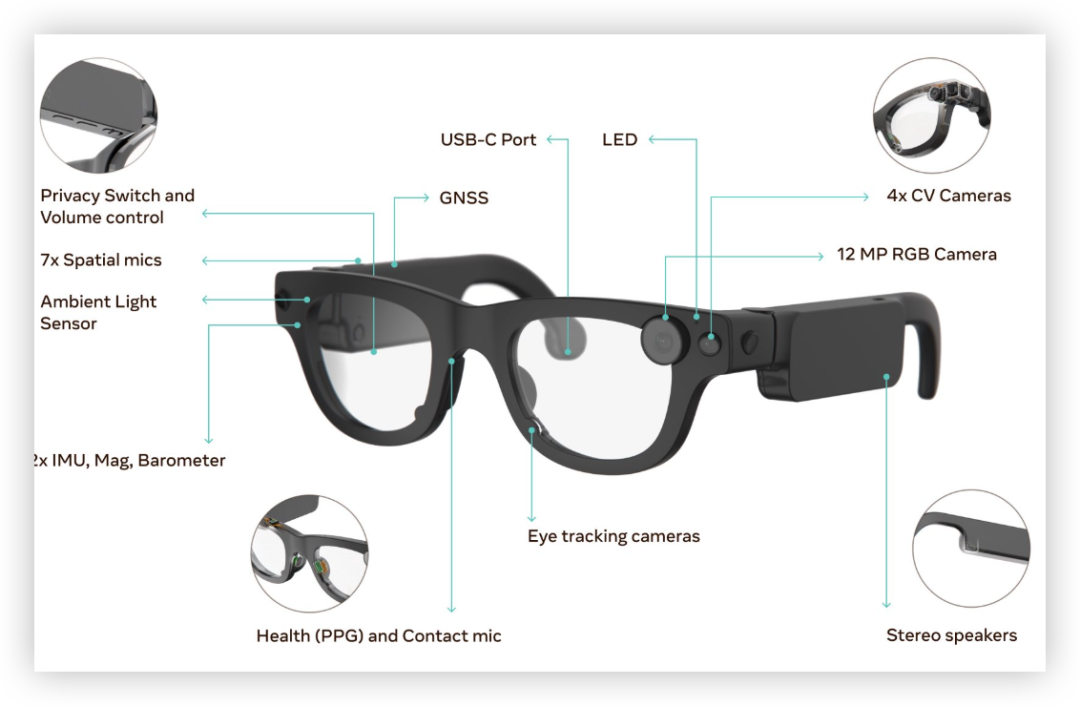
While the first-generation Ray-Ban Meta glasses achieved a weight of about 50g, Aria Gen 2 goes further, weighing only 74-76g and offering 8 sizes for different face shapes. The foldable arm design also greatly enhances portability. Imagine wearing glasses that not only let you see the virtual world but are almost imperceptible—this is true "invisible technology."
Comprehensive Upgrade in Perception: See, Hear, and Understand Accurately
Doubled Cameras, Wider Field of View
Aria Gen 2 is equipped with more cameras, providing a wider field of view, allowing AR content to cover a larger area. Meanwhile, the system can precisely capture users' attention focus through pupil tracking and blink detection functions, making the device's response more aligned with actual needs.
Smarter Ears
These glasses incorporate microphones in the nose bridge, accurately picking up voice commands even in noisy environments. This design not only improves the reliability of voice interaction but also makes operation more natural.
Gesture Recognition Enters 3D Space
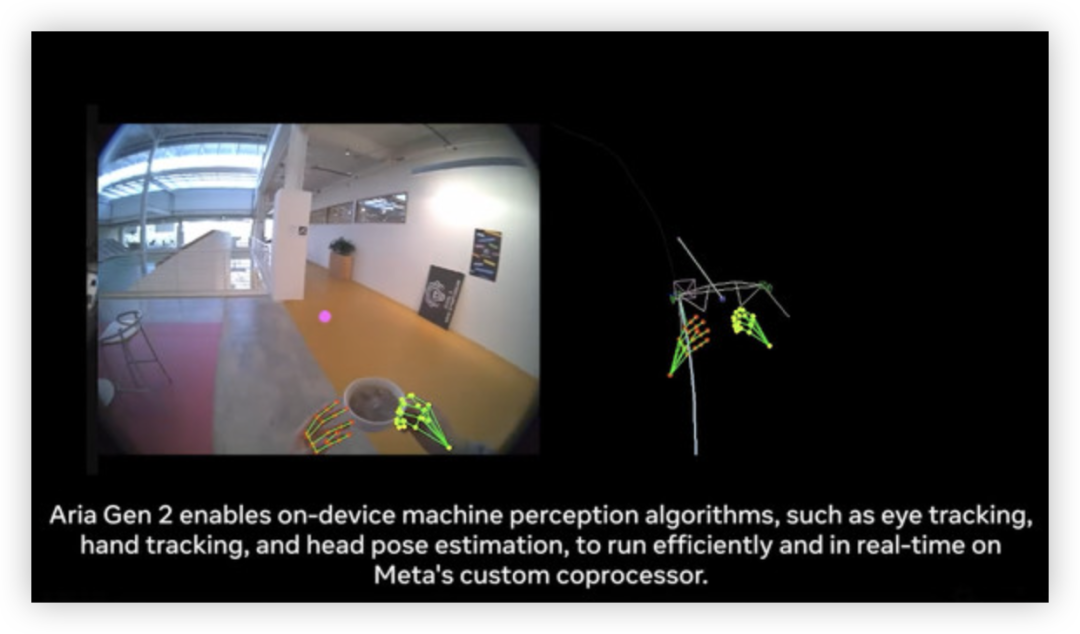
The camera-based gaze tracking function allows users to perform gesture control directly in three-dimensional space. Whether swiping screens, adjusting settings, or manipulating virtual objects, all of this can be easily accomplished through hand movements. This design brings new possibilities for future remote work, industrial manufacturing, and other scenarios.
Potential Application Scenarios: Not Just for Consumers, But Also for Enterprises
For ordinary users, Aria Gen 2 can become a smart assistant in daily life, helping with navigation, meeting recording, or real-time translation. In the medical field, it can help doctors analyze conditions faster; in manufacturing, engineers can use it for complex repairs. These potential application scenarios make people full of anticipation for the future development of AR technology.
Redefining the Future of Human-Computer Interaction
Although Aria Gen 2 is currently mainly targeted at researchers, its launch undoubtedly accelerates the pace of AR technology moving toward mass adoption. Perhaps in the near future, such a small yet powerful device will become an indispensable part of our daily lives. What Meta is pursuing is not just creating a cool product, but attempting to redefine how we interact with the digital world—and this, perhaps, is the true future.
分享文章
3篇相关文章
AR Glasses' Biggest Weakness, Solved? This Self-Tinting Lens Might Be the Last Piece of the All-Day Wearing Puzzle
2026-11-25
AR glasses fail outdoors not because the chips are weak, but because sunlight washes everything out. Miru and Biel Crystal are teaming up to fix exactly that.
How Will the AI Glasses Battle Play Out? Cellid, XREAL and Qualcomm Gave the Same Answer in Tokyo
2026-11-25
XR Kaigi 2026 opens next week, and three keynote speeches point to the same judgment: the deciding factor for AR glasses has shifted from display tech to AI ecosystems.
AR Glasses Too Crowded on the Street? These HIT Graduates Dove Into the Ocean and Raised 7 Million in Crowdfunding
2026-11-17
While every vendor fights for your face on the street, Xingyu Weilan put AR displays into a dive mask and found its blue ocean underwater.