
AR Glasses at $17,000: Is Snap Cutting the Corners or Revolutionizing Spatial Computing?
AR Glasses at $17,000: Is Snap Cutting the Corners or Revolutionizing Spatial Computing?
Friends, today the Detective wants to talk about something interesting.
In an era where big tech is competing on AI, lightweight design, and affordability, one company is going against the grain, dropping a whopping $2,500 (about 17,000 RMB) entry ticket.
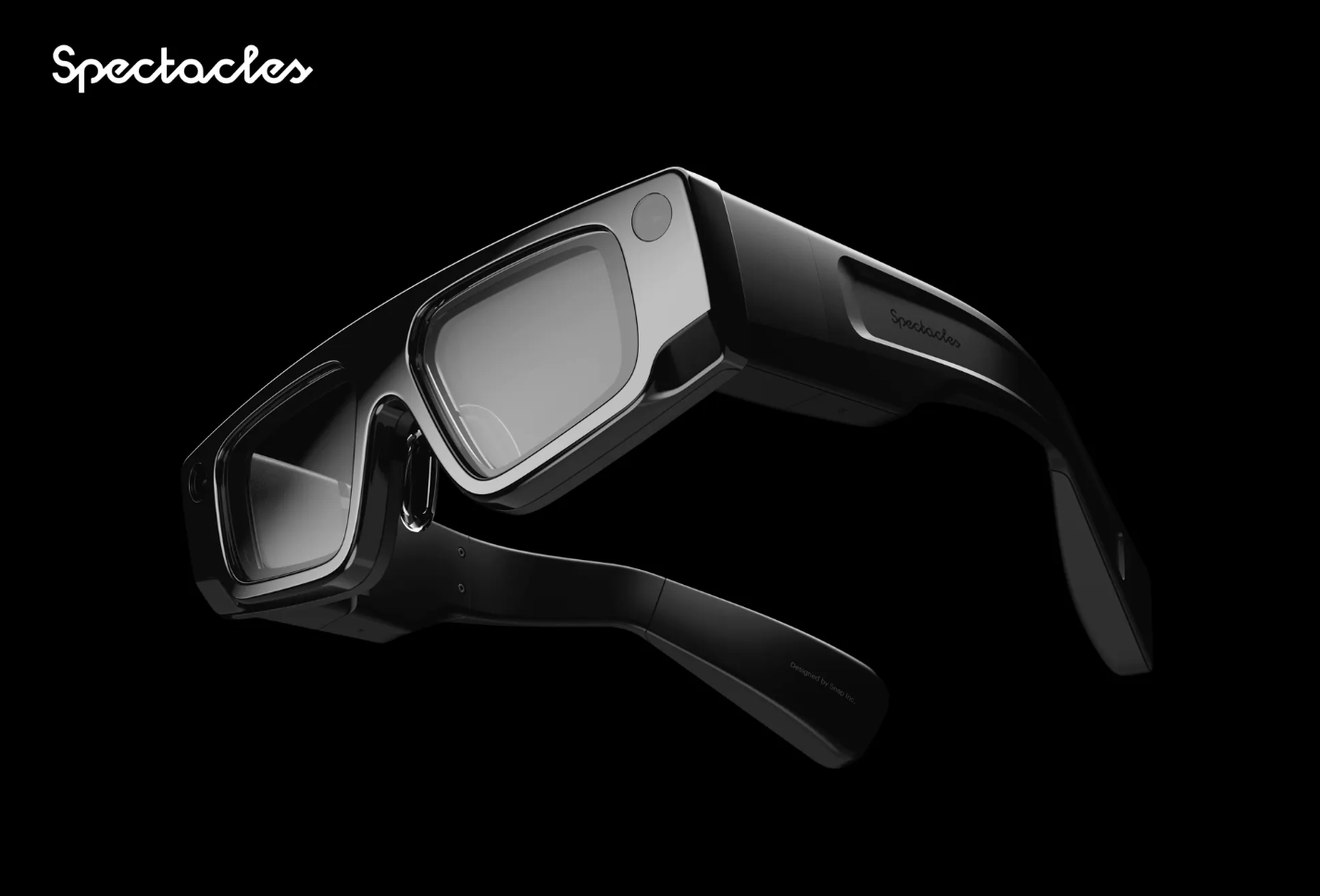
This is Snap, the "camera company" behind Snapchat, launching consumer AR glasses—Specs—in autumn 2026.
**At this price, either they've got some pretty sharp shears for韭菜韭菜韭菜韭菜韭菜韭菜韭菜韭菜韭菜韭菜韭菜韭菜韭菜韭菜韭菜韭菜韭菜韭菜韭菜韭菜韭菜韭菜韭菜韭菜韭菜韭菜韭菜韭菜
Let's dig into it: are these glasses worth it?
From "Face Filters" to Spatial Computing: Snap's Ten-Year Game
Roll back to 2015, when Snap was just a young social app doing "disappearing messages." But interestingly, in their IPO prospectus, they wrote clearly: "We're not a social media company, we're a camera company."
Sounds mysterious, but look at what they've done over ten years:
- 2015: Secretly acquired Ukrainian company Looksery, obtaining facial tracking and real-time video processing technology
- 2017: Launched Lens Studio, letting global users create AR filters
- 2021: Fourth-generation Spectacles finally added AR functionality, but only for developers
- 2024: Fifth-generation Spectacles, renting to developers for $99 monthly
- Autumn 2026: Consumer version Specs coming, priced at $2,500
You see, this isn't a whim—this is a carefully planned ten-year game.
Over a decade, Snap pushed AR from "phone-based face filters" to "wearable spatial computing terminals." They acquired spatial mapping company Illumix to bind virtual content with real-world physics; they polished the Snap OS 2.0 system to run multiple virtual windows simultaneously; they partnered with Qualcomm to nail down dual-chip computing power.
This isn't just making a product—this is building a complete spatial computing ecosystem.
The Technology Route: See the Real World, or See a Reconstructed World?
Specs' core technical choice is the OST (Optical See-Through) route.
What does that mean? Simply put—you see the real world directly through the lenses, with virtual content "layered" onto your field of view via optical waveguides. This is completely different from Apple Vision Pro's VST (Video See-Through)—which uses cameras to capture the real world first, then reconstructs it on screen for you to see.
Two routes, like two schools:
- VST faction: Emphasizes immersion, more complete fusion of virtual and real, but issues like latency, motion blur, and motion sickness are hard to eliminate
- OST faction: Emphasizes reality, you see the real world directly, low latency, no dizziness, but full-color waveguides have rainbow artifacts, and brightness and color uniformity aren't great
Snap chose OST, meaning Specs' experience will be closer to "adding an AR filter to reality" rather than "locking you in a virtual space."
This choice gives Specs real potential to enter everyday scenarios.
Who Will Specs' $2,500 Enter First?
Now the question: 100k first batch, $2,500 price tag—who's buying this thing?
Industry speculation: Specs will use titanium alloy frames with aerospace-grade plastic, controlling weight between 70-100 grams. That's much lighter than Apple Vision Pro's 500-600g, closer to sunglasses.
But at $2,500, this basically declares it's not for the mass market.
Specs' early users will likely be:
- Universities and research institutions: For AR experiments, HCI research
- AR developers and creators: Snap's Lens Studio has millions of creators who need hardware to test and optimize content
- Enterprise applications: Aviation training, industrial design, medical assistance requiring spatial computing
Sound familiar? Like Apple Vision Pro's path?
Vision Pro is doing exactly this: partnering with aviation trainer CAE, industrial software giant Dassault Systèmes, retailer Lowe's and healthcare provider Sharp HealthCare. When hardware costs are high, start with productivity scenarios, wait for tech maturity and cost reduction.
But here's the problem: Specs only has 45-minute battery life.
This means it's hard to be a heavy productivity tool, better for short-cycle specific tasks. Plus full-color waveguide rainbow artifacts, Specs can't yet enter those professional scenarios demanding high precision and stability.
So, who are the first users? Detective thinks it's more likely developers and enthusiasts willing to pay for frontier tech.
Racing Meta: Snap Wants to Define "All-in-One AR Glasses" First
Why launch such an expensive product now?
Because Snap is racing against time.
Current news:
- Meta's consumer all-in-one AR glasses (Orion consumer version): Expected late 2027
- Google and XREAL collaboration Project Aura: No price or launch date announced
- Snap's Specs: Launching autumn 2026, first batch 100k units
If Snap can achieve 100k mass production this autumn, they successfully beat Meta to defining the "all-in-one AR glasses" category first.
In tech, this isn't trivial. Who defines product form first gains initiative in future ecosystem battles.
Snap formed independent subsidiary Specs Inc. early this year, integrating Specs, Snap OS 2.0, and Lens Studio dev tools. This restructuring sends a clear signal: Specs is no longer a Snapchat accessory, but Snap's bet on the future as an independent platform.
Detective's Ultimate Question: Is Spatial Computing's Future "Replace Reality" or "Enhance Reality"?
Writing here, Detective wants to discuss something more essential with friends.
At $2,500, Specs might make industry seriously consider: What form of XR device truly fits daily life?
Apple Vision Pro tells you: Spatial computing should be a workstation on your face, 500+ grams, fixing you in specific scenarios, using VST to reconstruct a fused world.
Snap Specs tells you: Spatial computing should be wearable glasses, under 100 grams, using OST to let you see the real world, virtual content is just icing.
This is the divergence between "replace reality" and "enhance reality" routes.
VST wants to replace your seen reality with virtual images; OST wants to enhance your experienced reality with virtual information. Former more immersive, latter more real.
Over a decade, Snap pushed from AR filter software to hardware terminals. Millions of Lens Studio creators, Snap OS 2.0 standalone system, Qualcomm computing base form a complete ecosystem chain behind Specs.
But complete chain doesn't mean mature product.
45-minute battery, full-color waveguide rainbow artifacts, $2,500 price tag—any one is enough to block Specs from mass consumer market.
Even so, Detective believes Specs' launch has significant meaning.
Because it makes industry rethink: What spatial computing do we really want?
A powerful workstation on your face, or smart glasses融入ing daily life?
Specs might not be the final answer, but it makes the question itself clear.
Friends, when tech companies price products at $2,500, they're not betting on today's sales, but tomorrow's possibilities. Specs is Snap's answer to that possibility. Whether market buys it, we'll see autumn 2026.
After all, spatial computing's future isn't predicted, it's created by those brave enough to define it first.
Do you prefer VST's immersion or OST's reality? Share your thoughts with Detective in comments.
分享文章
3篇相关文章
Lamborghini Redefines Car Showrooms with Vision Pro, But You're Still Sitting in a Fake Car
2026-07-10
When technology lets you own everything in the virtual world, will you still pay for material possession in reality?
Meta Is Testing AI Glasses Without Privacy Indicator Lights
2026-07-09
Imagine a scenario: you walk into a café, and the person at the next table is wearing a pair of ordinary-looking smart glasses. You see no indicator lights flashing, but those glasses are recording audio and taking a photo every few seconds, capturing everything you do.
Even Realities Raises $150M: Not Making Second Pair of Eyes, Just First Screen
2026-07-07
Meta wants to cram cameras into every corner of their glasses, but Even Realities cut the camera completely. Yesterday this Chinese company secured a $150M Series B round led by Tencent and Meituan, reaching a $1B valuation.