
AR Glasses for $2195: What is Snap Thinking?
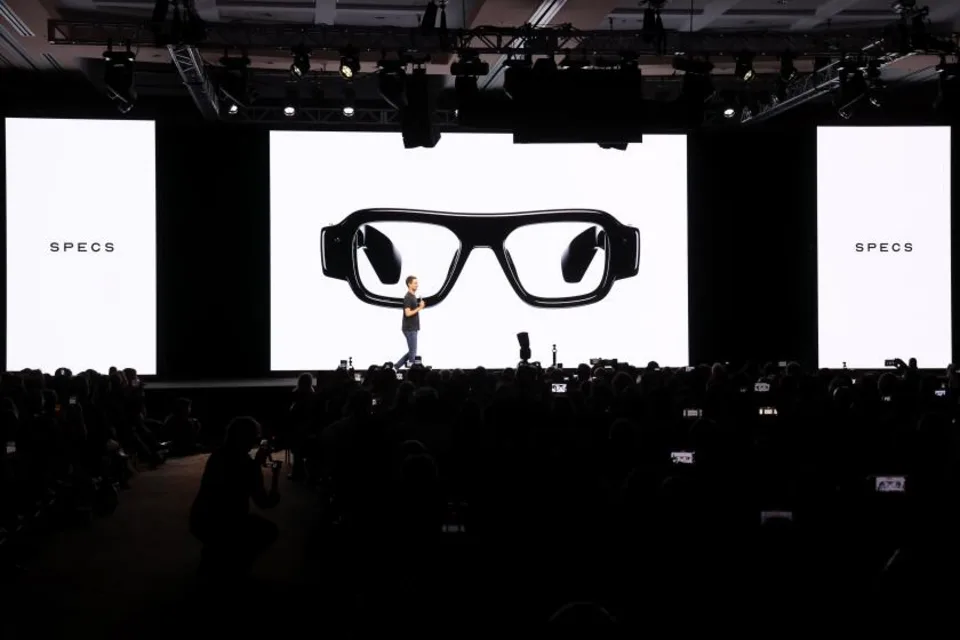
At the AWE conference in Long Beach, California, Snap released its new AR眼镜Specs, priced at $2195, approximately 16,000 RMB.
Meta's smart眼镜 collaboration with Ray-Ban starts at just $299. Snap's pricing pulls directly to nearly three times the iPhone Pro Max.
Snap CEO Evan Spiegel called Specs "the next major leap in computing." His logic: smartphones put life in your pocket, AR眼镜put computing power back into the real world.
This is indeed a form shift, a computing paradigm revolution. When learning drums, virtual drumsticks overlay in the air before you; when repairing vehicles, step guides float above the engine; when watching videos, the entire living room becomes your private cinema—this is the effect Specs wants to achieve.
But Snap isn't the first to enter.
IDC data shows that in the first quarter of this year, shipments of non-display smart眼镜reached approximately 2.25 million pairs, up 167% year-over-year. Meta leads with its Ray-Ban collaboration and is developing higher-end AR眼镜prototypes. Google plans to launch smart眼镜this fall, and Apple's similar products are also in development.
IDC Research Manager Jitesh Ubrani points out that dislodging Meta won't be easy, not just because of market share, but because of distribution channels—Meta continues to expand its offline retail stores.
Back to price. $2195 is indeed expensive. Spiegel's explanation is that new computing devices are initially high-priced, and only a few users can afford them, like the 1984 Mac, and Apple's $3500 mixed reality headset.
Snap is betting that the first users aren't ordinary consumers, but developers, creators, enterprise clients—people willing to pay a premium for cutting-edge technology. When technology matures and costs drop, then scale to mass market. Almost all revolutionary tech products have walked this path.
The situation is clear: Snap moves first with high-end AR眼镜to capture developer mindshare; Meta occupies the entry-level market with price-performance and channel advantages; Google waits in the wings; Apple positions quietly.
Snap Specs' $2195 pricing is more of a signal—AR眼镜are not toys, they're the next computing platform.
The tech industry doesn't need products that are "expensive for a reason," but it needs products that dare to define the future. Whether Snap Specs is that product remains to be seen. But it shows us a possible future—one no longer bound by mobile phone screens.
Will眼镜replace phones? I don't know. But someday, we'll take off VR headsets, put down phones, put on lightweight AR眼镜, and discover that the entire world can be augmented.
At that time, $2195 might not even buy a Bluetooth headset.
Today, it's an entry ticket to an era.
分享文章
3篇相关文章
Lamborghini Redefines Car Showrooms with Vision Pro, But You're Still Sitting in a Fake Car
2026-07-10
When technology lets you own everything in the virtual world, will you still pay for material possession in reality?
Meta Is Testing AI Glasses Without Privacy Indicator Lights
2026-07-09
Imagine a scenario: you walk into a café, and the person at the next table is wearing a pair of ordinary-looking smart glasses. You see no indicator lights flashing, but those glasses are recording audio and taking a photo every few seconds, capturing everything you do.
Even Realities Raises $150M: Not Making Second Pair of Eyes, Just First Screen
2026-07-07
Meta wants to cram cameras into every corner of their glasses, but Even Realities cut the camera completely. Yesterday this Chinese company secured a $150M Series B round led by Tencent and Meituan, reaching a $1B valuation.