
Meta Slams the Brakes on Third-Party Horizon OS Headsets—Is a VR Shakeup Coming?
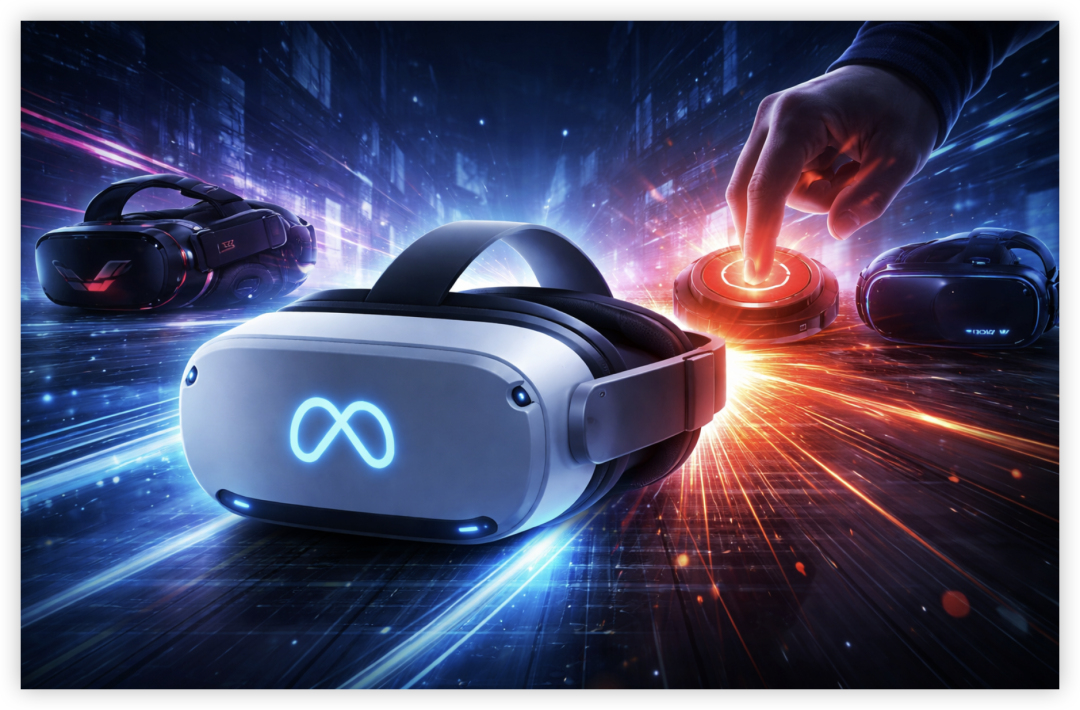
Recently, VR giant Meta—the same company that boldly opened Horizon OS and courted ASUS and Lenovo as launch partners—quietly yanked the handbrake on its third-party headset program. ASUS ROG’s “performance monster” and Lenovo’s “productivity workhorse” headsets are now on hold. What happened? Is the future of VR about to be reshuffled again?
Introduction
It was not long ago at Meta Connect that Mark Zuckerberg was confidently “charting the map” for XR. By opening Horizon OS and promising an ecosystem built with major hardware partners, Meta made it sound like VR’s mass-adoption spring was just around the corner. A diverse, Android-like hardware ecosystem seemed imminent. Yet less than two years later, this ambitious plan has spun 180 degrees. Behind the official line about “focusing on building world-class first-party hardware and software,” there are clearly deeper stories. The move is like dropping a boulder into the VR pond—the ripples are huge.
This is not a simple “pause.” It looks much more like a carefully choreographed piece of strategic “drunken boxing.” Rather than shrinking back, Meta may be recalibrating its entire course. It is a deep audit of its own capabilities and a fresh bet on where the market is heading. Is Meta tightening the reins to keep the lifeblood of VR firmly in its own hands? Or is it biding time, waiting to re-enter with overwhelming strength when the market finally hits escape velocity? Either way, this move will stir up the VR hardware chessboard.
The open-ecosystem dream was dazzling
When Meta opened Horizon OS, many saw it as a bid to recreate Android’s smartphone legend in VR. Imagine ASUS delivering a “performance-overkill” ROG gaming headset, Lenovo rolling out devices tuned for “work, study, and entertainment,” and Horizon OS becoming the beating heart of a thriving ecosystem. Even LG once toyed with a mysterious, ultra-premium $2000 headset. The future looked almost too good to be true.
Why the sudden U-turn? What is Meta thinking?
So what changed? Why did Meta suddenly decide to step away?
One likely factor is a major internal strategy pivot. Rumors suggest Meta has quietly shifted some metaverse investment toward more near-term AI glasses and wearables. That hints at a belief that AI and AR offer more immediate upside and deserve priority resources. VR is still the future, but tactics must remain flexible.
Another issue is technical maturity and ecosystem fit. Horizon OS is still young. Supporting a wide variety of third-party devices while keeping user experience consistent is a nearly impossible task. If Horizon OS headsets from different brands feel wildly different in quality, it is Meta’s brand that takes the hit. Better to refine the core experience first than risk a fragmented mess.
Then there is market control and fierce competition. While the VR “pie” is still small, Meta may want tighter control over hardware to protect the Quest line’s dominance and avoid diluting the spotlight with too many partners too early.
Finally, partner behavior likely played a role. LG’s abrupt halt on its high-end headset may have been a key trigger for Meta to reassess the entire third-party strategy. When core allies wobble, a domino effect is never far behind.
Impact and the road ahead: Where does the VR ecosystem go from here?
Meta’s hard brake on Horizon OS partners reshapes the VR scene in several ways. In the short term, Horizon OS’s ecosystem expansion will slow. Companies like ASUS and Lenovo that hoped to “ride the wave” must rethink their VR roadmaps or look to other platforms.
Speaking of alternatives, Google’s Android XR now looks especially intriguing. As Meta “builds behind closed doors,” Google is teaming up with Samsung, Xreal, Sony, and others to loudly promote its own XR ecosystem. Could this become a key inflection point where Android XR secures the high ground on third-party hardware? That is a storyline worth watching closely.
Still, Meta is not walking away. Phrases like “long-term commitment” and “we will revisit opportunities in the future” in official statements clearly imply: once the OS is more mature and timing is right, they plan to return. Meanwhile, Meta has never stopped investing in first-party hardware. Reports point to a more powerful, gaming-focused Quest 4 and a lighter mixed-reality headset in the works. Meta looks to be loading up for a future breakout moment.
Conclusion
Meta’s decision to pause third-party Horizon OS headsets is a defining milestone in VR’s evolution. It is a stark reminder of how hard it is to build a new computing platform. Balancing openness and control, speed and quality remains a puzzle that every tech giant struggles to solve. In the short term, the VR ecosystem may look a bit quieter. In the long run, though, this reset could push all players to double down on their strengths and ultimately deliver more mature VR technologies and products.
In this silent VR arms race, every step Meta takes tugs at the industry’s nerves. And we are all watching, waiting to see when the next big move lands.
分享文章
3篇相关文章
40 Grams - iFlytek's AR Glasses Finally Got the Weight Right
2026-03-03
Weight is everything. What does 40 grams mean? Regular optical glasses weigh about the same.
PICO's Counterstrike: Custom Chip + New System, Taking on Vision Pro Head-On
2026-03-03
After a year of silence in the VR industry, PICO has finally made its move. On March 2nd, they dropped three cards: a custom coprocessor chip, Project Swan flagship headset, and PICO OS 6 spatial operating system.
The AR Glasses Capital Frenzy: $200 Million in 6 Months
2026-03-03
Just 6 months, another $100 million raised. VITURE has created a storm in the capital markets.