
Headphones with Eyes? Razer Project Motoko Shakes Up AI Wearables Ultimate Form Battle
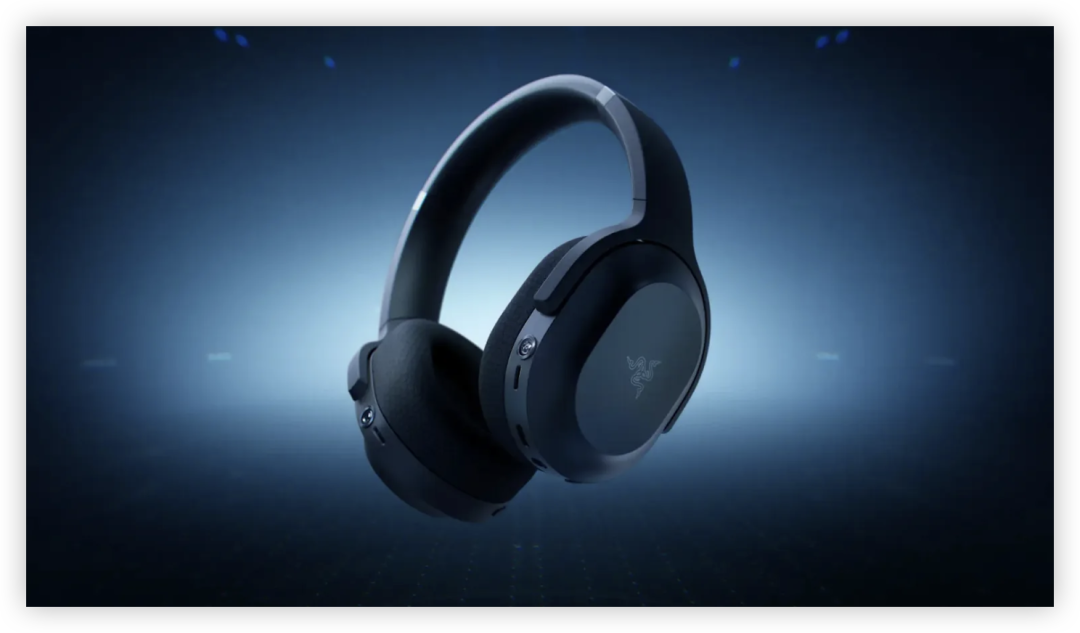
When the "Light Factory" decided to stop just playing with lights and instead teach headphones to observe the world, a revolution in AI wearable form factors officially began.
At the just-opened CES 2026 Las Vegas exhibition, Razer—playfully dubbed the "Light Factory" by gamers—once again proved with action: when it comes to imagination, you can always trust the three-headed snake.
This time, Razer didn't mess around with glowing masks or screen-equipped chairs. Instead, it unveiled a concept product that left the entire venue speechless—Project Motoko. This is an AI-native wireless headphone with "eyes."
While the entire tech world was betting on Meta's AI glasses or Apple's Vision Pro, Razer suddenly made a counterattack: who says AI's visual entry point must be mounted on your nose bridge? Hanging from your ears might be even better.
Logic Restructuring: Headphones Might Outperform Glasses
To many, adding cameras to headphones seems like a "Frankenstein" design. But think about it calmly—this could very well be a dimensional reduction strike against wearable AI logic.
Current AI glasses can see, but they're limited by the weight-bearing capacity of the nose bridge. Smaller size means poor audio quality, larger battery means crushing pain. Headphones are different. They span across the head with enormous weight-bearing potential, able to accommodate larger batteries, more powerful chips, and have an inherent audio quality moat. What Razer wants to do this time is forcibly merge "ultimate auditory immersion" with "precise visual perception," breaking the deadlock of each doing its own job.
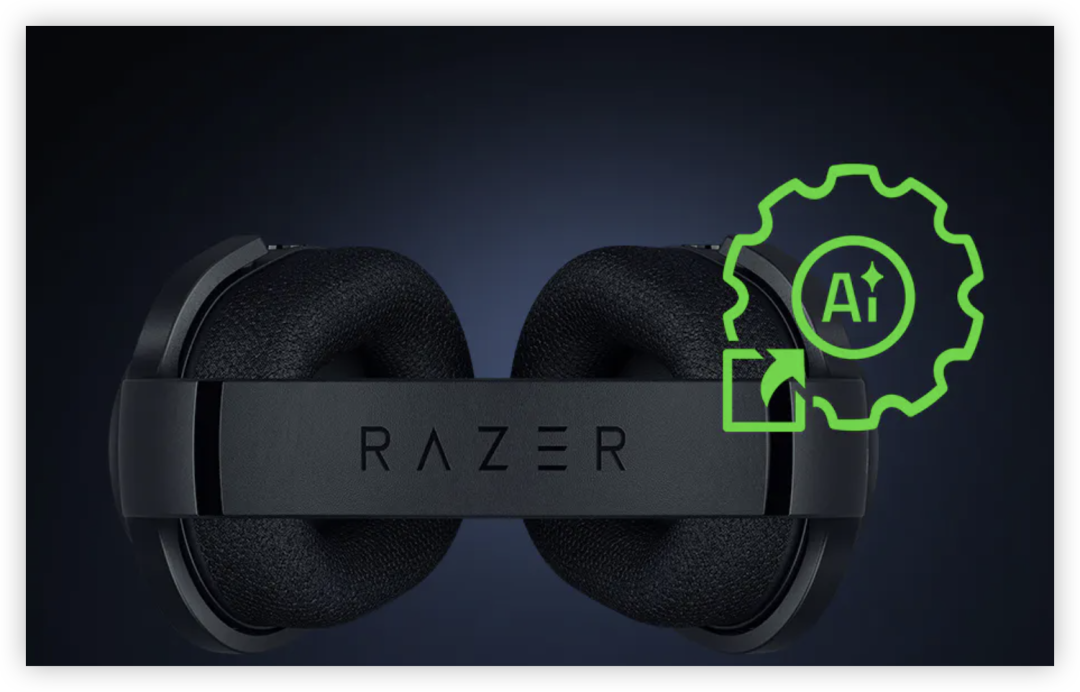
Deconstructing Project Motoko's Ambition
These high-precision "eyes" embedded in the ear cups aren't for taking selfies to post. They're AI sensors, windows through which it observes the real world.
Imagine walking through the streets of Tokyo or Paris. Without pulling out your phone, the headphones capture road signs and whisper translations directly into your ear. In the gym, these headphones transform into a personal trainer, watching your squat form and verbally reminding you in real-time not to arch your back. Even when you glance down at a long document, the built-in AI can instantly extract key points and tell you the core highlights like chatting with an old friend.
To support these complex visual algorithms, Razer packed in a Qualcomm Snapdragon chip specifically built for AI hardware. This means most processing happens locally, without waiting for cloud responses—reactions as fast as instinct.
The more subtle point is privacy. Speaking to thin air in public always seems a bit awkward, but the headphone's enveloping feel provides natural cover for voice interaction. This advantage of heavy interaction is something lightweight glasses can hardly offer.
The Unavoidable "Three Gates"
Of course, as cool-headed tech observers, we can't just look at the lab celebrations. Project Motoko faces three hurdles.
The hardest to overcome is probably "privacy anxiety." At least glasses' cameras follow your gaze—people know what you're looking at. But headphone side cameras might inadvertently sweep across everyone around you. This social psychological pressure of "being secretly filmed" will be Razer's biggest PR challenge.
Second is physical limits. After adding cameras and high-performance chips, are the headphones heavy? How do you handle heat dissipation? Will wearing them for long periods turn them into a "tight headband"? These are all necessary steps from concept to mass production.
Finally, don't forget Razer's track record at CES. From triple-screen laptops to modular cases, those stunning concept products mostly ended up as "vaporware." Whether Project Motoko is Razer flexing muscles in the AI race or a true pioneer that can change the future, no one can say for sure right now.
2026: Ears Officially Become AI's Battleground
Project Motoko's emergence is no accident. It's said that OpenAI is also working with former Apple Chief Designer Jony Ive on a big move, developing a "non-glasses form factor" hardware.
In 2026, we'll witness an unprecedented form factor battle royale: Meta's "glasses faction" focusing on first-person perspective, Razer's "headphone faction" pursuing audio-visual unity, and those minimalist "pin faction" players.
Razer's entry officially declares: ears are already AI's second battleground.
Technology Without Limits, Perception Without Boundaries
The name Project Motoko perhaps pays homage to Motoko Kusanagi from Ghost in the Shell—that cyberpunk icon where soul and machine are highly fused.
Although it's currently still an experimental prototype, it reveals an irreversible future: future AI assistants won't be cold apps, but your eyes, your ears, even an extension of your intuition.
If you had to choose, would you wear a pair of headphones that "can see," or choose a pair of glasses that "can hear"?
分享文章
3篇相关文章
Meta's AI Glasses Dilemma: When Your Glasses Know You Better Than Yourself, Should the Privacy Light Be On?
2026-07-30
When your glasses know you better than you know yourself, do you have a more convenient life, or deprived privacy?
Chinese AI Glasses Company Becomes Unicorn: What Does This Signal?
2026-07-09
Chinese smart glasses company Even Realities secured $150 million in funding, reaching a $1 billion valuation to become a unicorn. Led by Meituan and Tencent.
The 'Steam Engine Moment' for 3D Content Production: VAST Raised 1 Billion RMB
2026-07-02
When giants like Geely, Giant Network, and 4399 all bet on a 3D AI model startup, I think this signals something meaningful.