
Beyond Imagination! ISS and Earth Achieve Seamless Digital Twin Link—How Close Are We to Star Wars?
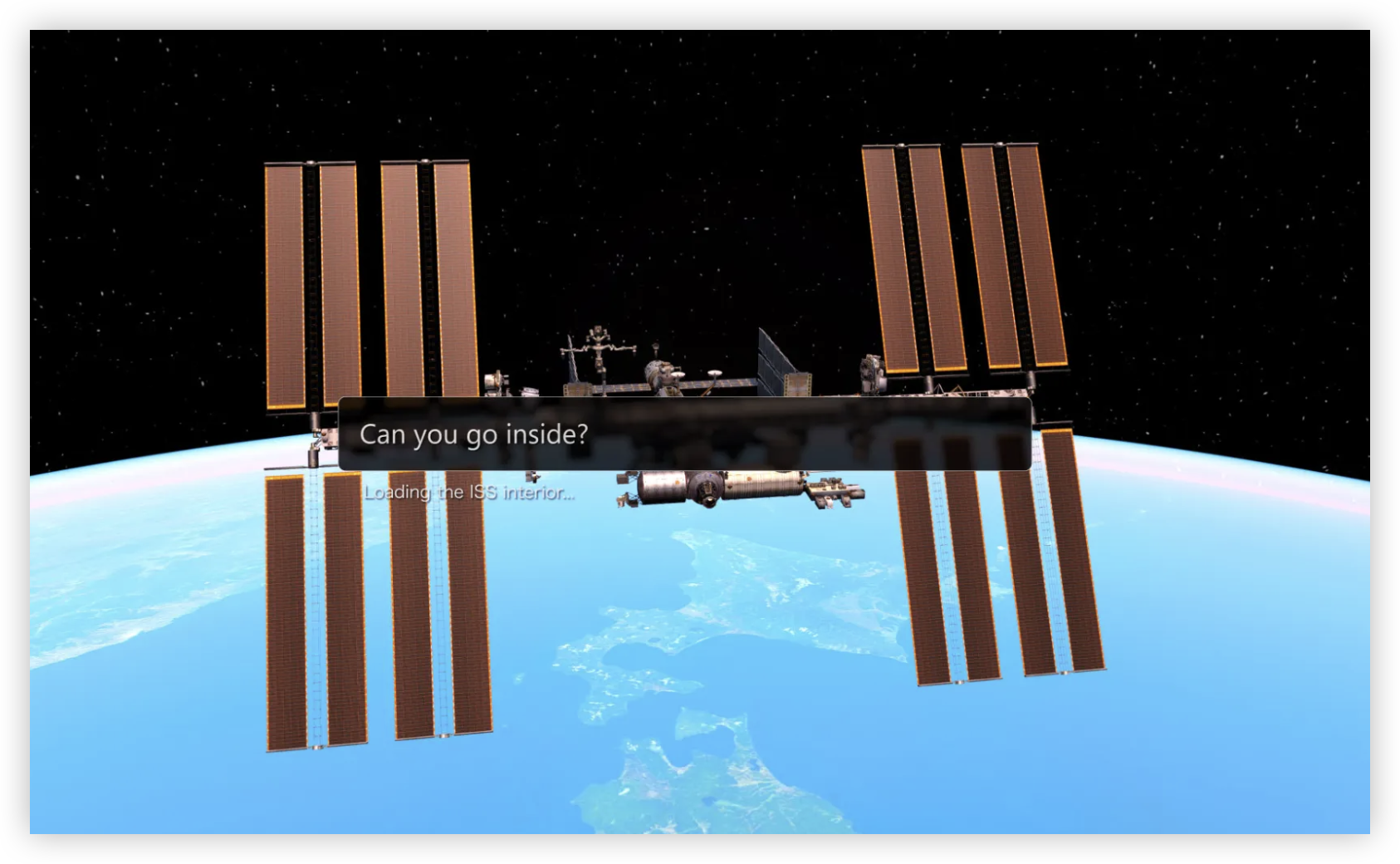
When virtuality pierces reality, digital twin technology rewrites the world at breathtaking speed. It already excels in urban planning and industrial manufacturing, faithfully mapping physical assets into the digital realm. Now Japanese innovator SpaceData has aimed straight at the cosmos. The company not only built a digital twin of the International Space Station (ISS) but also meshed it seamlessly with Earth’s digital twin, constructing the first “planetary-scale digital twin space.” What does this mean? How much closer are we to the sci-fi vision of holding the universe in our hands?
This breakthrough is more than another engineering marvel. It is a key that opens the door to “space democratization,” turning distant orbit into an experience accessible to everyone instead of an elite few. Its potential spans education, entertainment, research, and governance, signaling the dawn of a new metaverse era.
How did SpaceData pull it off? In simple terms, the team stacks real-time ISS orbital telemetry onto a hyper-accurate terrestrial digital twin. Through geospatial data assimilation, outer space and Earth’s environment cease to be isolated domains and become one seamless, interoperable continuum. Users can watch the ISS streak across their hometown sky or “stand” beside astronauts gazing down at the blue planet. The invisible information barrier between Earth and space evaporates.
What revolutionary value does this unlock?
Consider education and scientific research. Students no longer rely solely on textbooks to imagine space. They can adopt an astronaut’s perspective, join hands-on science modules, or run simulated Earth observation missions. Curiosity for science and space exploration will soar. The media and entertainment industries feel even more disruption. Built on this platform, a wave of immersive cosmic content can transport audiences across star systems for unprecedented sensory journeys.
The system also adds natural language interaction. Ask “Where is the ISS now?” and it instantly renders the station’s exact position in 3D. This intuitive interface eliminates complex controls and lets anyone explore the cosmos.
The achievement relies on cutting-edge tech. SpaceData uses NVIDIA Omniverse as the live data backbone, storing every digital twin asset in Universal Scene Description (USD) format to keep Earth and ISS datasets synchronized and up to date. Unreal Engine delivers cinematic rendering so deep space, the atmosphere, and even the sun’s incident angles appear physically correct. Bidirectional synchronization of position, time, and camera viewpoint plus HDR standard BT.2100 lighting combine to craft an ultra-realistic digital universe.
SpaceData’s ambitions reach beyond Earth and the ISS. The roadmap extends to the Moon, Mars, and other celestial bodies, gradually weaving a “universal digital twin network.” Lunar bases, Mars mission simulations, and cross-station operations could all prototype within this digital substrate. Paired with “Space Station OS,” a true cosmic digital ecosystem is rapidly taking shape.
The creators hope that viewing “space and Earth as one system” will help humanity tackle societal challenges. Climate change, astronomical observation, and resource management gain deeper insights and better solutions through panoramic digital twins. That is the practical path toward “democratizing the universe.”
SpaceData’s vision is to “make space a public utility.” Through digital twins, the team is constructing a platform that connects orbit and cities, covering urban development, disaster mitigation, and security. The future—where the universe sits at our fingertips—is racing toward us. Soon this digital cosmos will fundamentally change how we interact with the stars and the sea.
分享文章
3篇相关文章
40 Grams - iFlytek's AR Glasses Finally Got the Weight Right
2026-03-03
Weight is everything. What does 40 grams mean? Regular optical glasses weigh about the same.
PICO's Counterstrike: Custom Chip + New System, Taking on Vision Pro Head-On
2026-03-03
After a year of silence in the VR industry, PICO has finally made its move. On March 2nd, they dropped three cards: a custom coprocessor chip, Project Swan flagship headset, and PICO OS 6 spatial operating system.
The AR Glasses Capital Frenzy: $200 Million in 6 Months
2026-03-03
Just 6 months, another $100 million raised. VITURE has created a storm in the capital markets.