
Your Virtual Idol Might Just Appear in Your Living Room
A few days ago, I experienced something a bit "surreal" in Japan.
Put on a pair of AR glasses, and suddenly Mashiro Nagino (Nagino Mashiro) appears on an empty stage—life-sized, three-dimensional, and interacting in real-time. Not a recording, not a holographic projection, just standing there.
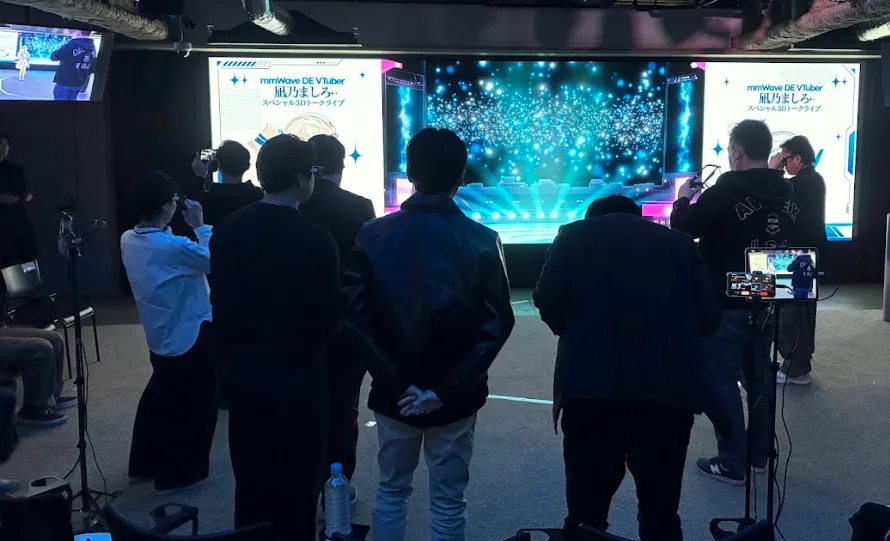
This happened on March 17, 2026, organized by Mawari with technical support from KDDI. Today, let's talk about the technical logic behind this experience and the changes it might bring.
It Looks Real
The on-site experience was simple: pick up a pair of XREAL Air 2 Ultra glasses, put them on, and look at the stage.
And then Mashiro Nagino appears.
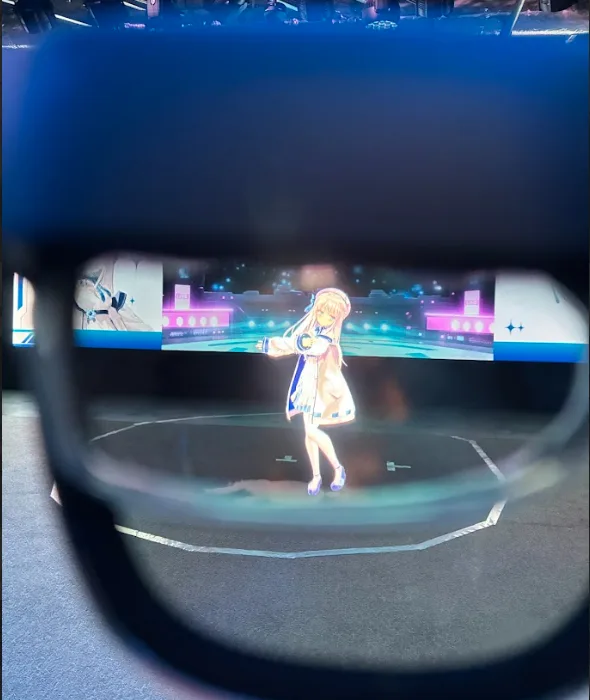
Not one of those flimsy paper-thin characters from low-quality AR apps that "float" in the air, but standing firmly on the ground, with even the shadows at her feet matching perfectly. You can walk around and view from 360 degrees—front, side, back, any angle.
At the scene, I saw someone walking around the virtual idol several times, someone snapping photos frantically. Mashiro chatted with the host about games and daily life, the interaction felt natural, with almost no noticeable lag.
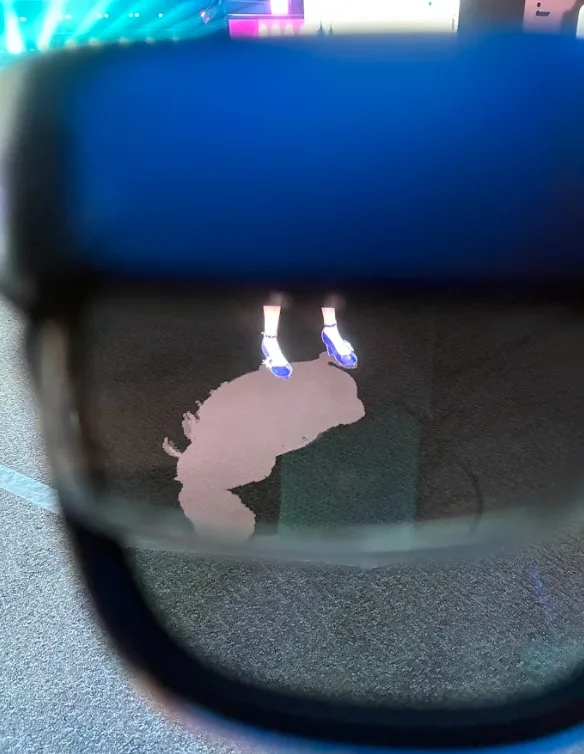
Honestly, this "sense of real presence" was stronger than I expected. Not because the image quality was amazing, but because the details were handled well—feet don't hover, shadows change, movements are fluid. These seemingly minor details are precisely what make virtual characters "look real."
How Is This Technically Achieved?
Two key terms:5G millimeter wave and cloud rendering.
5G Millimeter Wave: A VIP Lane for Data
Traditional 5G (Sub-6 band) is fast, but when everyone uses it together, bandwidth still gets contested. Transmitting ultra-HD 3D video streams requires "exclusive lanes."
5G millimeter wave is that VIP lane. Higher frequency band, wider bandwidth, data can "monopolize" the high-speed channel without lagging because others are using the network.
But millimeter wave has a fatal problem:it gets blocked easily.
The higher the frequency, the more it travels in straight lines, the worse its obstacle-navigation ability. A wall, a pillar can block the signal. KDDI's solution was to add repeaters, deploying several on-site to ensure signal coverage across the entire experience area.
Cloud Rendering: Moving Computing Power to the Cloud
Traditional AR requires 3D rendering on local devices, which demands high hardware performance.
This time used cloud rendering: 3D models, animation, and rendering all completed in the cloud, processed video streams transmitted to glasses in real-time via 5G millimeter wave, glasses only responsible for display.
The advantage is obvious:terminal devices can be made very lightweight. A pair of AR glasses can achieve effects that originally required high-performance PCs.
What Can This Be Used For?
If it's just "seeing idols," this technology is overkill.
Mawari's ARAWA platform aims to build a complete MR content ecosystem:
- Virtual Idol "Tour" — No venues needed, VTubers can "appear" anywhere in the world
- Limited MR Videos — Fans purchase exclusive experiences viewable only at specific locations and times
- Local Marketing — Companies sponsor virtual idols to "appear" at specific locations for regional marketing
Essentially, this breaks geographical limitations.
Traditional concerts need to consider venues, logistics, security. Virtual idol AR tours can theoretically happen simultaneously at multiple locations worldwide, with fans at each location feeling it's an "exclusive" experience.
There Are Still Some Issues
The event also exposed some problems:
- Long device preparation time
- Occasional disconnections
- AR glasses' field of view and resolution still have room for improvement
But these are being quickly resolved. KDDI says it will provide more millimeter wave test sites, and AR hardware is iterating.
What I find interesting is the comparison:In February 2025, Nijisanji did a similar experiment using VR headsets (Quest 3).
This time used AR glasses, lighter, more suitable for extended wear, but immersion and visual quality aren't as good as VR. Future might see this division: VR for ultimate immersion, AR for portable comfort.
When the Boundary Between Virtual and Reality Blurs
At the event's conclusion, Mashiro Nagino said: "Being able to truly exist in the same space, I'm very happy."
This statement is interesting. For virtual characters, this is the first time interacting with fans through "physical presence"; for fans, the emotional connection from this experience far exceeds screen-based interaction.
I couldn't help but imagine some scenarios:
- Virtual idols "appearing" at fan proposal scenes
- Digital twins of deceased relatives "participating" in family gatherings
- During remote work, colleagues' virtual avatars "sitting" beside you
These scenarios used to exist only in sci-fi, now seem increasingly close.
Final Words
From text, images, audio, video to VR/AR, we've been looking for better ways to "shorten" the distance between people.
This combination of AR glasses + 5G millimeter wave + cloud rendering brings us one step closer to a future where we can "be with anyone (including virtual people) anytime, anywhere."
If your virtual idol suddenly appeared in your living room, what's the first thing you'd do?
Sources:
- MoguraVR on-site report
- Mawari official press release
- KDDI 5G millimeter wave technical documentation
分享文章
3篇相关文章
Lamborghini Redefines Car Showrooms with Vision Pro, But You're Still Sitting in a Fake Car
2026-07-10
When technology lets you own everything in the virtual world, will you still pay for material possession in reality?
Meta Is Testing AI Glasses Without Privacy Indicator Lights
2026-07-09
Imagine a scenario: you walk into a café, and the person at the next table is wearing a pair of ordinary-looking smart glasses. You see no indicator lights flashing, but those glasses are recording audio and taking a photo every few seconds, capturing everything you do.
Even Realities Raises $150M: Not Making Second Pair of Eyes, Just First Screen
2026-07-07
Meta wants to cram cameras into every corner of their glasses, but Even Realities cut the camera completely. Yesterday this Chinese company secured a $150M Series B round led by Tencent and Meituan, reaching a $1B valuation.