
No More Poking Virtual Keyboards: VR Finally Gets a Truly Satisfying Input Upgrade
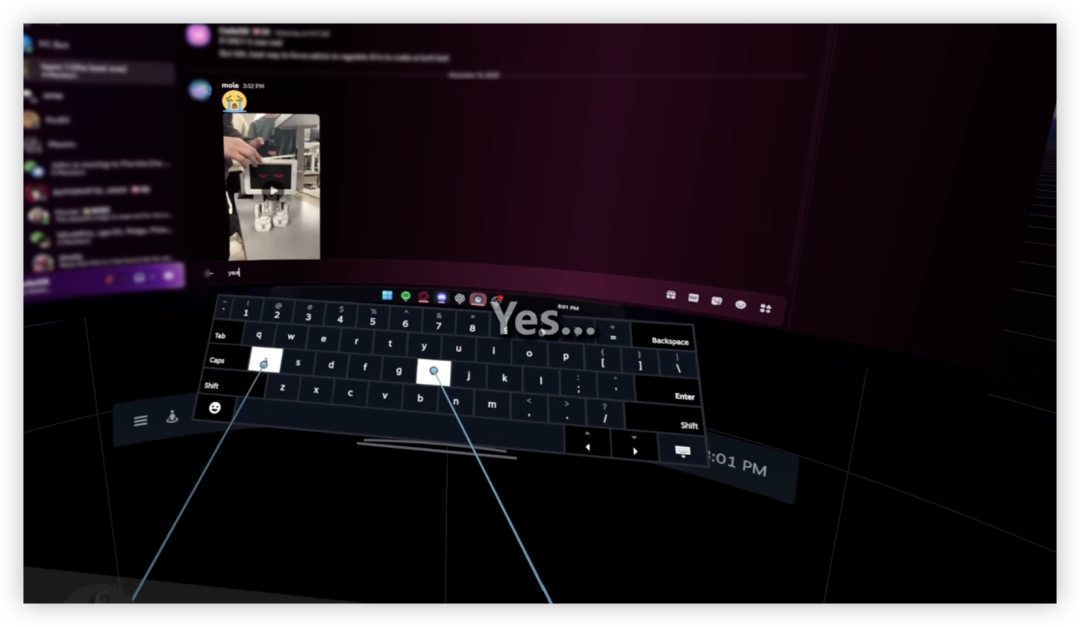
In virtual worlds, our hands should not be chained to twenty-six letters.
If you are a long-time VR user, you know the frustration of “having power but no way to use it.”
In VRChat, sending a simple greeting, or searching a long webpage in a VR browser, often means raising your controllers and pecking at a floating keyboard like a bird. It is slow, error-prone, and immersion-breaking. That feeling of suddenly becoming a “computer newbie” in cyberspace is one of VR’s biggest mood killers.
The good news: help is finally on the way. A voice dictation keyboard app called Yap has officially been announced, and next month that tedious “poke typing” pain might become a thing of the past.
Why we desperately need a ‘mouth proxy’
When people talk about VR, attention usually goes to resolution, refresh rate, or tracking specs. But in reality, the details that drive users away are often the basics. Input efficiency is the biggest bottleneck stopping VR from evolving from a ‘gaming device’ into a real productivity tool.
If replying to a message takes thirty seconds, who wants to work in the metaverse? What Yap really does is plug the last missing piece in VR interaction. Its goal is simple: let you communicate in virtual worlds as easily as sending a voice message on your phone.
Let algorithms handle the complexity and keep things simple for users
Yap started from a simple complaint: “I am sick of typing in VR.” But the product that emerged is surprisingly hardcore.
It is not a clunky standalone app. Instead it is a SteamVR overlay. Think of it as a semi-transparent layer that can float above any game or productivity app. Whether you are drafting documents or filling forms inside an independent app, Yap hovers as your on-call personal assistant.
The operation is as intuitive as it gets. You do not need to dig through menus. Just hold the “B” button on your controller and start talking. By the time you finish your sentence, the text is already placed precisely at the cursor. That “say it and it appears” feeling is exactly what modern tech should deliver.
Even better, it includes real-time translation. With support for more than 55 languages, Yap can instantly turn your spoken Chinese into fluent English or Japanese. It is not just a keyboard; it is a pocket translator that tears down language barriers in social VR.
From social chaos to late-night work, Yap has you covered
It is easy to picture how much more fun VR becomes once Yap is live.
In the past, running into foreigners in VRChat often left shy users resorting to awkward waving and nodding. Now you can chat freely while watching Yap feed your thoughts into the conversation in real time. Deep, cross-border communication—that is what metaverse socializing should look like.
In work scenarios, Yap is even more of a lifesaver. Anyone who has tried replying to work email in a headset knows how soul-crushing that can be. With Yap, you can lean back on the couch wearing a headset and dictate a thousand-word email with your voice alone. Its “quietly running in the background, not blocking your view” design makes VR work feel finally practical instead of just a cool demo.
Next month, give your VR a ‘tongue’
At its core, interaction is about moving information.
Yap’s creators chose the most direct medium—voice—to link our thoughts with virtual screens. It will not boost your GPU frame rate, but it can dramatically increase how happy you feel using VR.
If you are tired of clumsy virtual keyboards, keep an eye on next month’s launch. In a world of infinite virtual possibility, expressing your ideas should never feel like hard physical labor.
分享文章
3篇相关文章
AI Meets Immersive Learning: How Lenovo And VR Vision Reshape Enterprise Training
2025-11-14
Lenovo and VR Vision combine AI and VR to build personalized, data-driven immersive learning that ushers corporate training into a new era.
Meta Quest Hand Tracking 2.4: Your Hands Finally Keep Up With Your Brain in VR
2025-12-18
Meta Quest’s Hand Tracking 2.4 update supercharges the high-speed mode for smoother, more accurate gesture control. Here is a deep dive into its three core technical upgrades and what they mean for VR immersion.
VR Karting: When Virtual Meets Reality, The Next Racing Era Arrives
2025-11-17
French company EVA fuses real kart driving with virtual worlds to deliver an unprecedented immersive racing experience and redefine entertainment.