
Meta Quest Hand Tracking 2.4: Your Hands Finally Keep Up With Your Brain in VR
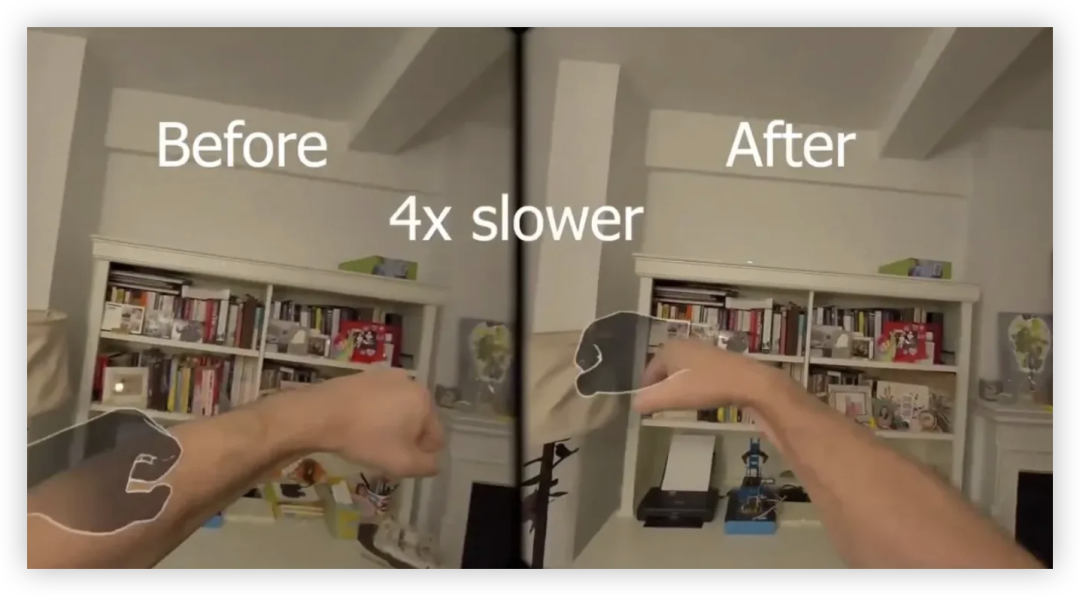
In the magical world of virtual reality, our hands are invisible wands that guide us to explore, create, and interact. If those wands are sluggish or unresponsive, even the most spectacular VR scenes fall flat and immersion shatters. The good news: Meta Quest has just rolled out a major upgrade—Hand Tracking 2.4—focused on making your “super hands” move faster, smoother, and with more punch in VR.
Introduction
Have you ever tried to throw punches, swing a sword, or grab objects quickly in VR only to feel like everything lags a beat—or worse, that your hands simply “vanish”? That gap between intention and feedback is exactly where hand interaction in VR has struggled. As a VR frontrunner, Meta has long understood the importance of great interaction and has been steadily investing in hand tracking. The 2.4 release, with its deep optimization of the high-speed mode, is another big stride toward more natural and intuitive VR experiences. So what exactly is new? Let us break it down.
Meta’s relentless push on hand tracking is turning sci-fi visions of controller-free interaction into everyday reality. Version 2.4 is not a minor patch; it is the culmination of years of incremental progress. It signals a clear leap forward—and possibly a paradigm shift—in how we control VR. In the coming years, our hands will no longer be bound by cold controllers, but will instead become the most natural and powerful remote controls we own.
2.4: Three core upgrades that put ‘high-speed’ into high gear
The 2.4 update zeroes in on refining high-speed mode with three major breakthroughs that finally let your hands truly “fly” in VR:
-
Lightning re-acquisition: Goodbye, “where did my hand go?”
Previously, when your hands left the camera’s field of view and then quickly came back, the system often needed a beat to recognize them again. Version 2.4 aggressively optimizes this behavior. Now when your hands re-enter the Quest’s view, the system can instantly “catch” and “lock” onto them. This stability holds even during rapid or wide movements, dramatically reducing tracking dropouts so you can stay focused on the action instead of debugging your hands.
-
Silky motion: Every swing feels like flowing water
Fast hand motions—like punching, swatting, or rapid tapping—used to look a bit choppy or unnatural. With advanced motion upsampling, those high-speed gestures now appear smoother and more continuous than ever before. Trajectories look clean and organic, eliminating that jagged “sawtooth” feel. Whether you are in an intense VR brawler or performing delicate finger work, your actions feel fluid and full of impact.
-
Instant response: Toward true hand–mind harmony
Latency is immersion’s worst enemy. By tuning the high-speed motion filter, version 2.4 significantly cuts the delay between your real-world hand movements and virtual feedback. Input becomes more timely and precise, delivering a near “what you see is what you do” experience. Every tap, grab, and swipe aligns more tightly with your intent, making VR interactions feel as direct and instinctive as reality.
High-speed mode’s ‘superpowers’—and its quirks
This high-speed mode is powerful, but it has its own preferences and prerequisites:
-
High frame rates required
To deliver extreme smoothness, high-speed mode runs Quest’s cameras at 50Hz or 60Hz—well above the usual 30Hz. That boost is what makes the improved responsiveness visible and tangible. -
Light is your friend
For the best experience, especially on earlier Quest hardware, bright environments are key. Good lighting is the lifeblood of optical tracking and helps the system keep a reliable lock on your hands. -
Opt-in, not automatic
High-speed mode is not enabled for every app by default. Developers need to explicitly integrate and enable it. For now, Meta’s own demo app “Move Fast” is the best showcase if you want to feel the difference yourself. -
Exclusive focus
High-speed mode currently cannot run alongside VR controllers, Passthrough MR, or eye and face tracking on Quest Pro. It is laser-focused on pure controller-free VR hand interaction.
Meta’s hand tracking sprint: From first steps to 2.4
Meta Quest’s hand tracking journey began in late 2019 and ramped up quickly in early 2020. The pace since then has been relentless:
- Version 2.0 improved handling of fast motion and hand occlusion
- Version 2.1 reduced tracking loss and sped up re-acquisition
- Version 2.2 focused on lowering latency
- Version 2.3 refined stability and precision
Each iteration reflects deep thinking and constant iteration from Meta’s engineering teams. Version 2.4 stands as the current pinnacle of that work.
Conclusion
The Meta Quest Hand Tracking 2.4 update is more than a bump in technical specs; it is a qualitative leap in immersion and interaction. It makes our hands in VR more agile, accurate, and expressive, further loosening the shackles of traditional controllers. As this technology matures, we can expect VR worlds to become freer and more intuitive, with our hands serving as the most powerful wands we wield in boundless virtual spaces. With more developers embracing these capabilities, new interaction paradigms and VR experiences are just around the corner.
分享文章
3篇相关文章
No Glasses Needed for VR! This Technology Really Understands Nearsighted Users!
2025-08-01
VR users' blessing! Japanese company Lannet launches VOY VR adjustable focus lenses, completely solving the glasses hassle for nearsighted/farsighted people in VR worlds, achieving truly unrestrained immersive experiences!
No More Poking Virtual Keyboards: VR Finally Gets a Truly Satisfying Input Upgrade
2025-12-18
Typing in VR has always been a pain. The upcoming Yap voice keyboard lets you ‘talk’ your way through everything in virtual worlds.
VR Karting: When Virtual Meets Reality, The Next Racing Era Arrives
2025-11-17
French company EVA fuses real kart driving with virtual worlds to deliver an unprecedented immersive racing experience and redefine entertainment.