
Nurses Must 'Face Violence' Before Internship: How This University Uses VR to Teach Self-Protection
Nurses Must 'Face Violence' Before Internship: How This University Uses VR to Teach Self-Protection
Friends, today the Detective saw some news that's both interesting and heartbreaking.
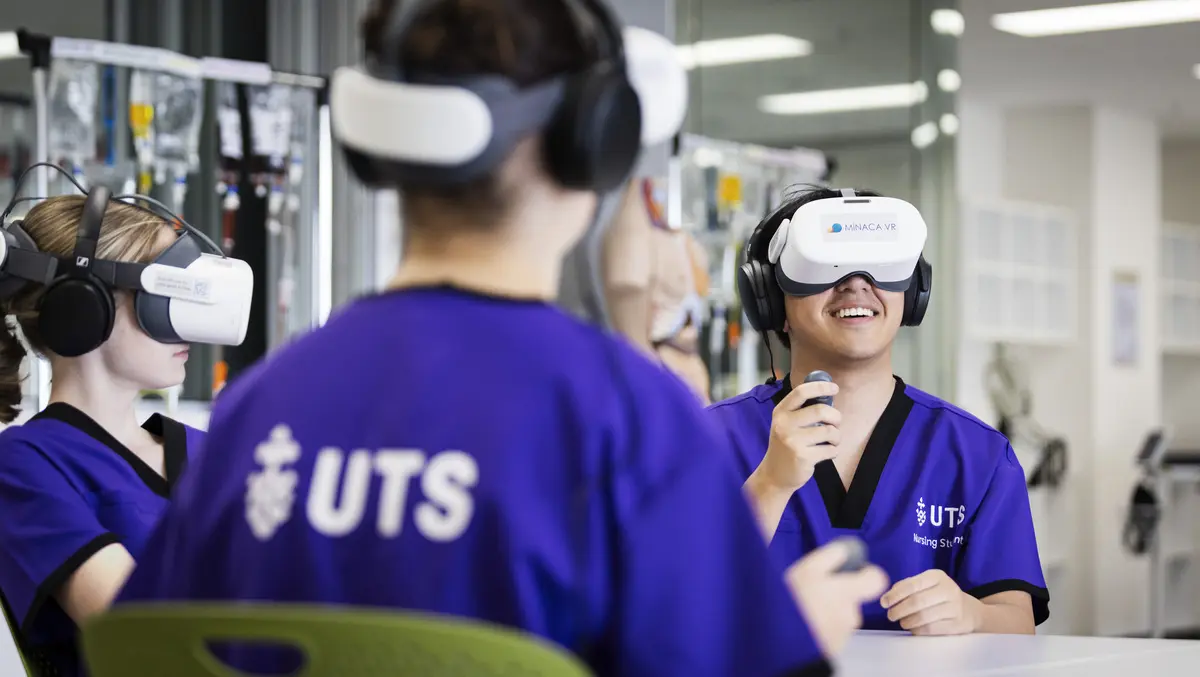
University of Technology Sydney (UTS) introduced a new rule: All first-year nursing students must complete VR violence prevention training before entering clinical internships.
This isn't an elective course—it's a mandatory requirement: no pass, no internship.
Sounds harsh? But after seeing the data behind it, the Detective thinks this regulation might just be the beginning.
88% of Nurses Have Witnessed Violence: This Isn't a Drill
Let's start with a shocking number.
The New South Wales Nurses and Midwives Association conducted a survey: 88% of nurses, midwives, and caregivers have witnessed violence or aggressive behavior in the workplace.
You read that right—88%, not 8.8%.
This means nine out of ten nurses have seen physical or verbal abuse in hospitals.
And those fresh graduates starting internships? They generally lack conflict response experience. Traditional classroom teaching and role-playing can't truly expose them to high-pressure environments.
It's like learning to swim: you can practice strokes on deck a thousand times, but you'll still choke when you hit the water. But if you "choke" a few times in VR first, you'll handle it better when the real thing comes.
This is UTS's core reasoning for using VR—letting students taste danger in a safe virtual world before facing real risks.
VR's "Take-a-Hit" Class: Learning to Recognize Signals, Not Fight Back
How does this course work?
Students put on VR headsets and enter simulated medical scenarios with various conflicts: aggressive speech, loss of behavioral control, doctor-patient disputes.
The focus isn't teaching you to fight back, but recognizing early warning signals of conflict escalation.
Just as animals show abnormal behavior before earthquakes, violence often has warning signs: faster speech, larger movements, increasingly aggressive eyes. You might ignore these signals normally, but after drilling in VR a few times, they become conditioned reflexes.
Pilot data shows 90% of participants reported VR training helped them learn to recognize early warning signals and take appropriate measures to diffuse situations.
This 90% isn't made up.
Why Traditional Teaching Falls Short: Lack of "Realness"
We've all been students. Teachers say "stay calm during conflicts," you nod like crazy, but still panic when it happens.
Role-playing? Classmates perform for each other, but you know it's acting, hard to truly enter the mindset.
But VR is different.
VR can create highly immersive learning experiences while fully safeguarding students' physical and psychological safety.
This comes from Jacquie Pietch, Deputy Head of Learning and Teaching at UTS's Faculty of Nursing and Midwifery. Detective translates: students can "experience" real violent scenarios in VR without physical harm, and psychological pressure can be controlled by exiting the system anytime.
It's like flight simulators—you can crash ten thousand times in simulation, so you don't crash once when flying for real.
Not Just Australia's Problem: A Global Plight for Healthcare Workers
Australia is leading this time, but this exists globally.
Workplace violence against healthcare workers exists in every country, just to varying degrees.
The Detective thinks UTS's approach has three值得借鉴 aspects:
First, shifting from passive response to active prevention.
It used to be "deal with it when it happens," now it's "learn self-protection before internship." This represents proactive risk management, not reactive remediation.
Second, using technology to bridge traditional teaching gaps.
Role-playing isn't real enough, live demonstrations too dangerous—VR sits perfectly in that middle ground: both safe and realistic.
Third, data-driven, measurable results.
90% effectiveness isn't just feeling—it's data-backed, providing evidence for wider adoption.
Detective's Reflections: VR's Educational Value Finally Recognized
Writing here, the Detective wants to discuss something bigger.
VR has had ups and downs these years. Everyone looks for "killer apps." Some say VR is for gaming, others for virtual social.
But the Detective always felt one of VR's greatest values is in education.
Why? Because education has an eternal challenge: how do students learn to handle dangers safely?
Medical students, how to practice on real patients? Pilots, how to practice failure handling mid-air? High-risk professions, how to train for real scenarios?
VR offers a perfect solution: virtual reality.
You can let students make mistakes in VR, "die" a hundred times in virtual worlds, so they live longer in the real world.
Starting from UTS, Will This Spread?
Deputy Dean Jacquie Pietch said: "This is a common gap in medical education. I hope other universities explore similar approaches."
The Detective thinks this isn't just hope—it's inevitable.
Reason is simple: when technology matures to a certain point, not using it costs more than using it.
Teaching a student violence response used to require years of clinical experience accumulation, real conflict events as teaching materials. With VR, you can give large numbers of students similar experience in weeks.
Efficiency up, cost down, results better—this tech will spread inevitably.
Friends, when we talk about AI, metaverse, VR, we easily get caught in tech hype. But truly valuable applications are always those solving real-world pain points.
UTS using VR to teach nurses self-protection might not be flashy, not sci-fi, but the Detective thinks this is what technology should look like—not replacing humans, but protecting them.
After all, those healthcare workers saving lives in hospitals—they need protection too.
What other educational scenarios do you think VR could apply to? Share your thoughts with the Detective in comments.
分享文章
3篇相关文章
VR Tactical Shooter Geronimo: When Virtual Death Teaches Real-World Communication and Collaboration
2026-07-27
Steam just launched a VR tactical shooter called Geronimo—aimed at squad tactical combat, rough around the edges but gets the core right.
13 Tons of VR Headsets Cross the Ocean: Valve's Hardware Gamble
2026-06-15
A container ship from Shanghai arrived in Los Angeles carrying Valve's first 13 tons of Steam Frame VR headsets. This marks Valve's transition from virtual to reality, from code to hardware.
Pico's Next Headset Leaked: Did Their Designer Copy Apple and Samsung's Homework?
2026-06-12
Pico's next flagship headset Project Swan leaked unexpectedly, and why does this design look so familiar? Independent battery, woven head strap, 270g weight... I feel like I've seen this before.