
Unveiling Meta Quest 2025 Player Profiles: How Four User Groups Are Reshaping VR Gaming's Future?

When virtual reality (VR) is no longer exclusive to sci-fi movies but gradually integrated into our entertainment lives, we can't help but ask: who is immersing themselves in this new digital realm? What do they play? Why do they play? Meta's latest 2025 Quest player segmentation analysis lifts the veil on VR players, outlining four distinct core user groups—a valuable map for VR content developers and marketers.
Understanding Player Psychology, Unlocking New VR Paradigms
The VR gaming market is developing at unprecedented speed, but to navigate this blue ocean, deeply understanding players' real needs and intrinsic motivations is crucial.
Meta's report is based on psychology's "Self-Determination Theory," categorizing player motivations into "Competence" (pursuing skills and achievements), "Relatedness" (seeking social connection), "Autonomy" (enjoying freedom and control), and "Leisure" (pure relaxation and fun). This isn't just simple player classification but deep guidance for VR content development and market strategy. We can foresee that successful VR games won't be "one-size-fits-all" products but crafted experiences that precisely touch different players' psychological needs.
Four Player Profiles: Who Is Your VR Game For?
The report divides Quest users into four categories, each representing unique behavioral patterns and preferences worth exploring:
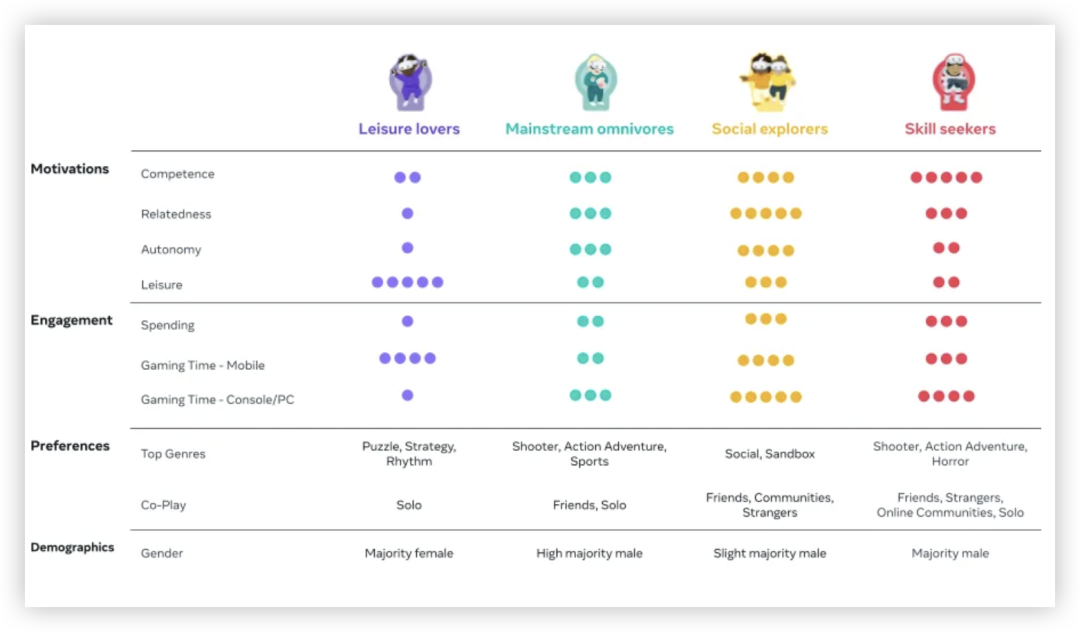
Leisure Lovers: Easygoing "Zen" Players
These players see VR as a daily life refresher, seeking brief relaxation and mood shifts. They prefer mobile devices or tablets for gaming, meaning lightweight, easy-to-pick-up experiences that don't require long-term investment. Puzzle, rhythm, and simulation games are their favorites—simple controls, clear achievements, and affordable or free models attract them most. For developers, these players want "small but beautiful" VR mini-games that deliver quick satisfaction.
Mainstream Omnivores: Explorers Seeking Balance Between Immersive Stories and Challenge
If Leisure Lovers are VR's "light eaters," Mainstream Omnivores are "experience seekers." They crave immersive narratives, enjoy moderate challenges, and prefer exploring virtual worlds with friends and family. They don't stick to specific genres but love well-known IPs and popular series. Consoles are their main battleground, with male players in the majority. For these "backbone" players in Meta Quest's growth strategy, VR games must offer easy entry with deep immersion, balancing storytelling and multiplayer interaction, and spreading widely through social media and streaming platforms so they feel VR's "cool" and "fun."
Social Explorers: Seeking Connection and Creation in Virtual Spaces
These players are undoubtedly loyal supporters of the metaverse concept. They play VR not to win or lose but to connect, co-create, and express themselves. Sandbox games, custom avatars, and social platforms like VRChat are their playgrounds. They span platforms—consoles, mobile, and VR. Meta knows that for these players, social features' depth and breadth are crucial—voice chat, friend invites, community events, and user-generated content (UGC) support are all "magic tools" to retain them. VR isn't just gaming—it's a stage to build another social circle.
Skill Seekers: Challenging Limits, Achieving Self—"Hardcore" Players
Finally, VR's "competitors." They are core players pursuing skill mastery, conquering high difficulty, and leaving their names on leaderboards. Shooting, action, horror, and other games requiring high reaction speed and strategy are their favorites. They invest significant time and money, are "enthusiasts" switching between PC, console, and VR platforms, with males in the majority but female players growing rapidly. VR content for them must provide clear progress feedback, detailed ranking systems, rich reward mechanisms, and competitive events, letting them constantly surpass themselves in virtual worlds and experience true "master-level" encounters.
Blueprint for Building Future VR Ecosystems
Meta's report isn't just an accurate profile of current VR players—it also draws a clear blueprint for future VR content development and marketing strategy. It tells us VR is no longer a single market but a rich ecosystem driven by diverse needs. Developers must break free from traditional thinking, tailor game content to different user groups' characteristics, optimize user experience, and adopt more targeted marketing approaches.
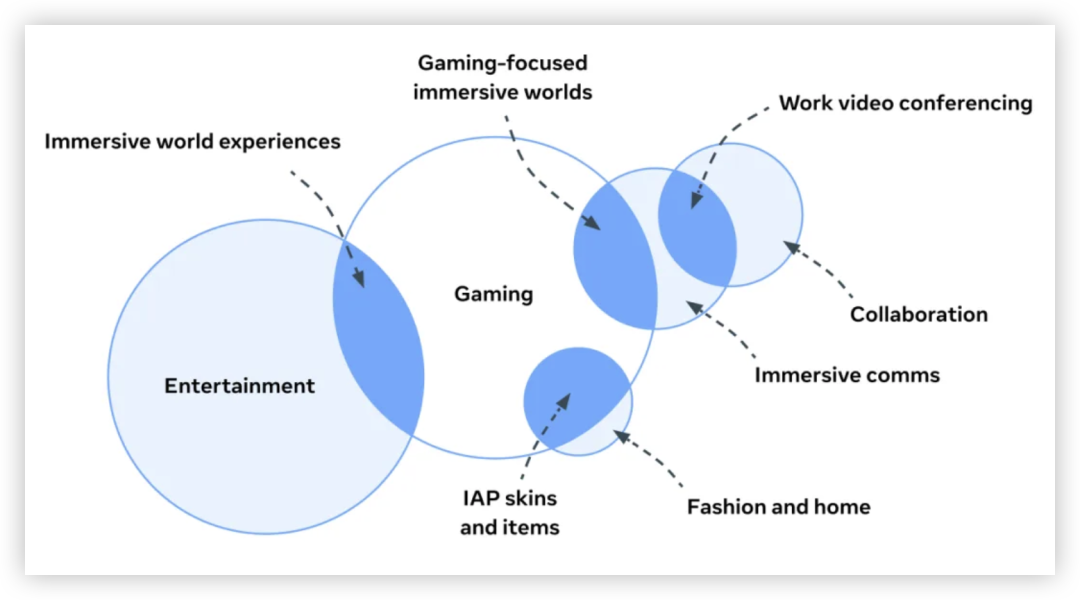
VR's future lies in satisfying every unique "you." From relaxed leisure entertainment to epic immersive experiences, deep social interaction to competitive challenges, the VR world is becoming richer and more inclusive. By accurately understanding and meeting these diverse needs, we can collectively push VR technology from "novelty" to "necessity," truly unlocking the metaverse's infinite possibilities.
分享文章
3篇相关文章
Meta Quest Hand Tracking 2.4: Your Hands Finally Keep Up With Your Brain in VR
2025-12-18
Meta Quest’s Hand Tracking 2.4 update supercharges the high-speed mode for smoother, more accurate gesture control. Here is a deep dive into its three core technical upgrades and what they mean for VR immersion.
No Glasses Needed for VR! This Technology Really Understands Nearsighted Users!
2025-08-01
VR users' blessing! Japanese company Lannet launches VOY VR adjustable focus lenses, completely solving the glasses hassle for nearsighted/farsighted people in VR worlds, achieving truly unrestrained immersive experiences!
Military Metaverse Era Arrives? Anduril and Meta's XR Revolution in Defense Technology!
2025-05-30
Imagine this scene: Marines wearing specialized headsets in a desert training ground, immediately seeing 1:1 scale recreations of East Asian city streets - this isn't science fiction, but Anduril and Meta's XR training system for the US military. When a tech unicorn meets a defense giant, a technological revolution that could change the rules of warfare is quietly unfolding.