
Tearing Open The Metaverse's Blind Spot: Disabled Users Give The Most Unexpected Answer
Are There Invisible People In The Metaverse? A New Study Breaks The Silence
When you step into a dazzling digital universe, what does your avatar look like? Most people instinctively upgrade themselves—glossier looks, idealized bodies, a "perfect" version of who they are. But what if some users deliberately choose to show their real‑world “imperfections” in the metaverse—and gain power and recognition from it?
Introduction
The word "metaverse" carries our wildest expectations about the future of socializing, work, and even existence. It promises a space beyond physical limits where creativity reigns. Yet beneath this seemingly omnipotent virtual world lies an uncomfortable question: is it truly built for everyone? For people with physical disabilities in particular, where do they place their authentic selves in the metaverse?
A joint study by the University of Stuttgart, California State University Fullerton, and the Max Planck Institute for Intelligent Systems offers a surprising answer. It suggests that authentically representing disability in virtual avatars can be far cooler—and more meaningful—than we assumed.
Key Insight
For years we have fallen into a familiar assumption: virtual worlds are safe havens where disabled people escape their physical limits, and hiding disability is a kind of protection from stigma. This study cuts through that illusion.
It shows that when disabled users can have avatars that mirror their real‑world bodies, most feel deeply comfortable and empowered. Many express a simple truth: “My disability is part of who I am—everywhere.” This is not just a technical milestone. It is a humanistic awakening. The metaverse should not gently erase difference; it should boldly celebrate it, so every unique person can stand tall in digital spaces.
Findings
Browse today’s metaverse platforms and you will see endless shiny, fantastical avatars—but very few that visibly reflect disability. Behind this gap is often a “well‑meant” bias: if this is a virtual world, then disabled users should be free from physical constraints and enjoy a fully “able‑bodied” fantasy. Yet this good intention strips away the right to be seen as they truly are.
To dig deeper, the research team designed a careful experiment.
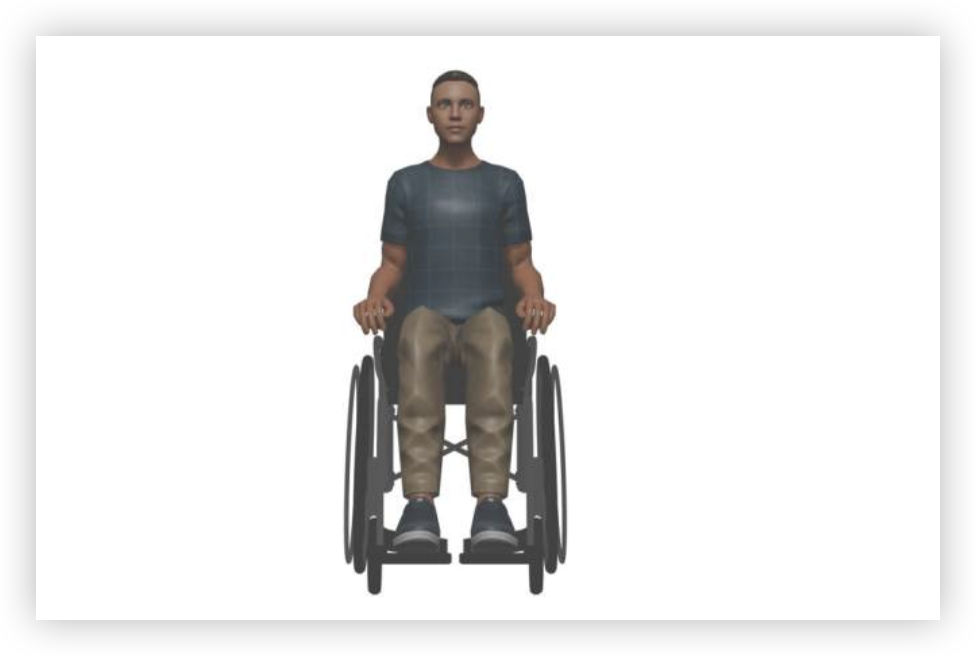
They recruited 81 disabled participants and created inclusive avatars tailored to each person. Some used wheelchairs, others carried canes, and some wore sunflower symbols on their clothing to represent invisible disabilities. For two weeks, participants used these avatars in social VR platforms such as VRChat—chatting, watching movies, and hanging out much as they would in physical life.
The outcome was striking.
The vast majority felt at ease and aligned with their inclusive avatars. Many described a sense of wholeness—as if, for the first time, their metaverse selves matched their real identities. An unexpected bonus: many non‑disabled users responded with curiosity and openness when interacting with these avatars. The encounters became invisible bridges toward understanding and empathy between groups.
Of course, not everyone felt the same. A small subset preferred to temporarily “set aside” disability in virtual spaces and enjoy pure escapism. That desire is valid too—after all, escapism is one of the metaverse’s charms. But overall, the drive to authentically express self was dominant.
Crucially, the study goes far beyond casual socializing. It carries powerful implications for companies experimenting with virtual offices and hybrid work.
The metaverse offers an unprecedented chance for employers to include one of the world’s largest under‑employed groups: people with disabilities. When disabled employees can comfortably and openly show their real identities in virtual workplaces, their sense of belonging and motivation can soar. The metaverse should not be a cold productivity tool; it should be a humane, expressive ecosystem that makes room for every body and every story.
Conclusion
Disability is not a defect to be hidden. It is one expression of human diversity. Both the physical world and the digital realm should serve as extensions and stages for our authentic selves.
Co‑author Katrin Angerbauer, a PhD student who uses a walking aid in both physical and virtual spaces, puts it plainly: “On the road to a diverse metaverse, we need more courage and bolder experimentation.”
Soon we may see virtual meeting rooms where avatars in wheelchairs, with canes, or with distinctive markers collaborate as equals and spark new ideas. A more inclusive, more humane digital era is calling. This study is one firm step toward that future.
Reference: https://techxplore.com/news/2025-11-avatar-wheelchair-diversity-metaverse.html
分享文章
3篇相关文章
2025, Is the Metaverse 'Dead'? Nvidia and Roblox Smile Silently!
2025-12-30
Fervor recedes, those swimming naked scatter. When Roblox stops talking about Metaverse, when Nvidia quietly profits in factories, the real metaverse is just beginning.
Metaverse Travel: A Virtual Adventure About To Rewrite Your Worldview
2025-11-26
The metaverse travel market is surging toward an estimated $276.41 billion by 2034 with a 41.8% CAGR, signaling a revolution in how we explore the world.
The Metaverse Reaches Physical Industries! Nvidia Partners With BMW And Siemens To Build A Digital-Twin Empire!
2025-11-13
The metaverse has moved beyond science fiction into the next business frontier. This deep dive shows how Lowe's, Kroger, BMW, Siemens, and ILM use NVIDIA Omniverse and related technologies to construct virtual worlds that fuel innovation and growth.