
Your Next Computer Might Be Worn on Your Nose
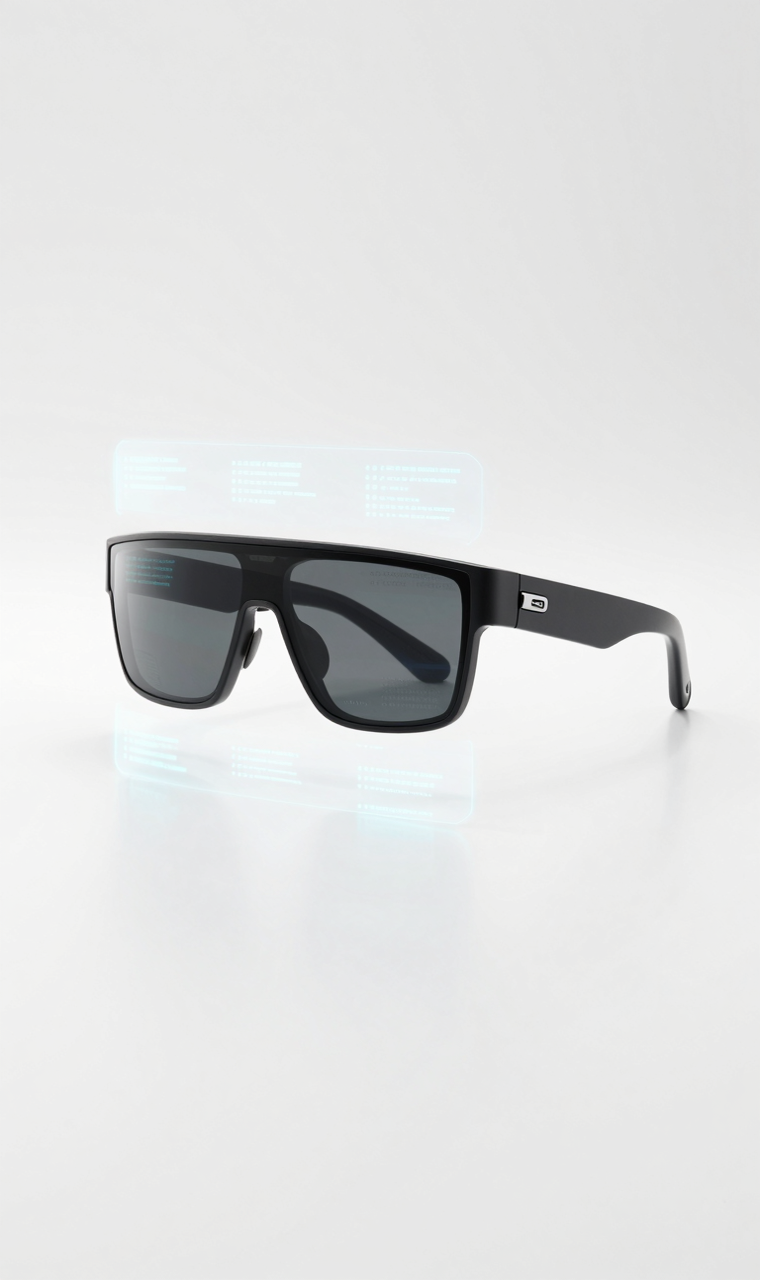
Imagine you're sitting in a cafe, suddenly struck by an app idea. No need to pull out your laptop, no need to find an IDE. Just push your glasses and say: "Help me build this prototype."
In minutes, a working app appears right before your eyes.
Chinese company Monako recently released Monako Glass—$399, 48 grams, a Linux computer worn on your face.
Display, camera, speaker, bone-conduction microphone, gesture interaction—it's all there. But what's most noteworthy isn't the hardware, it's what's inside: Claude Code, Codex, and other AI Agents.
The founder put it bluntly: "This is the world's first glasses-style Linux computer. Run Claude Code, Codex, and any programming Agent anywhere, anytime."
Claude Code, Codex—these tools have evolved from code completion assistants into intelligent agents capable of debugging, code review, and generating applications autonomously.
Monako Glass's logic is simple: tell the AI what you want, then watch it build for you.
In the official demo, users show handwritten formulas to the glasses, and the AI converts them to LaTeX in real-time. Generated content can be pinned directly to the glasses interface.
Monako believes our relationship with computing devices will shift from "I operate software" to "I supervise AI work."
Smart glasses become the real-time monitoring terminal for cloud AI Agents.
But a few issues need clarification first.
Battery life, chipset, storage—Monako hasn't released these key specs. How much power for a device running AI Agents? How long can it last?
Privacy concerns with cameras and continuous AI interaction—what happens when you wear this around? How will people react?
Can viewing code and managing tasks on a small glasses screen really replace traditional PC workflows? Or is this just a "looks cool but actually useless" supplementary device?
Monako Glass's value lies not in whether it's a perfect product, but in the direction it points.
As AI Agents grow more powerful, we may not need more powerful computers—we need more natural interaction interfaces.
Smart glasses are becoming that interface.
Five years from now, looking back, laptops might be like desktop towers—needed only for niche professional scenarios.
Most people? They'll just need a pair of glasses.
分享文章
3篇相关文章
Meta's AI Glasses Dilemma: When Your Glasses Know You Better Than Yourself, Should the Privacy Light Be On?
2026-07-30
When your glasses know you better than you know yourself, do you have a more convenient life, or deprived privacy?
Chinese AI Glasses Company Becomes Unicorn: What Does This Signal?
2026-07-09
Chinese smart glasses company Even Realities secured $150 million in funding, reaching a $1 billion valuation to become a unicorn. Led by Meituan and Tencent.
The 'Steam Engine Moment' for 3D Content Production: VAST Raised 1 Billion RMB
2026-07-02
When giants like Geely, Giant Network, and 4399 all bet on a 3D AI model startup, I think this signals something meaningful.