
How This Chinese Company Became Global No.1 in AI Glasses
Friends, Meta, Apple, and Google have poured billions of dollars into AI glasses, but guess what? The global number one spot has been taken by a Chinese company.
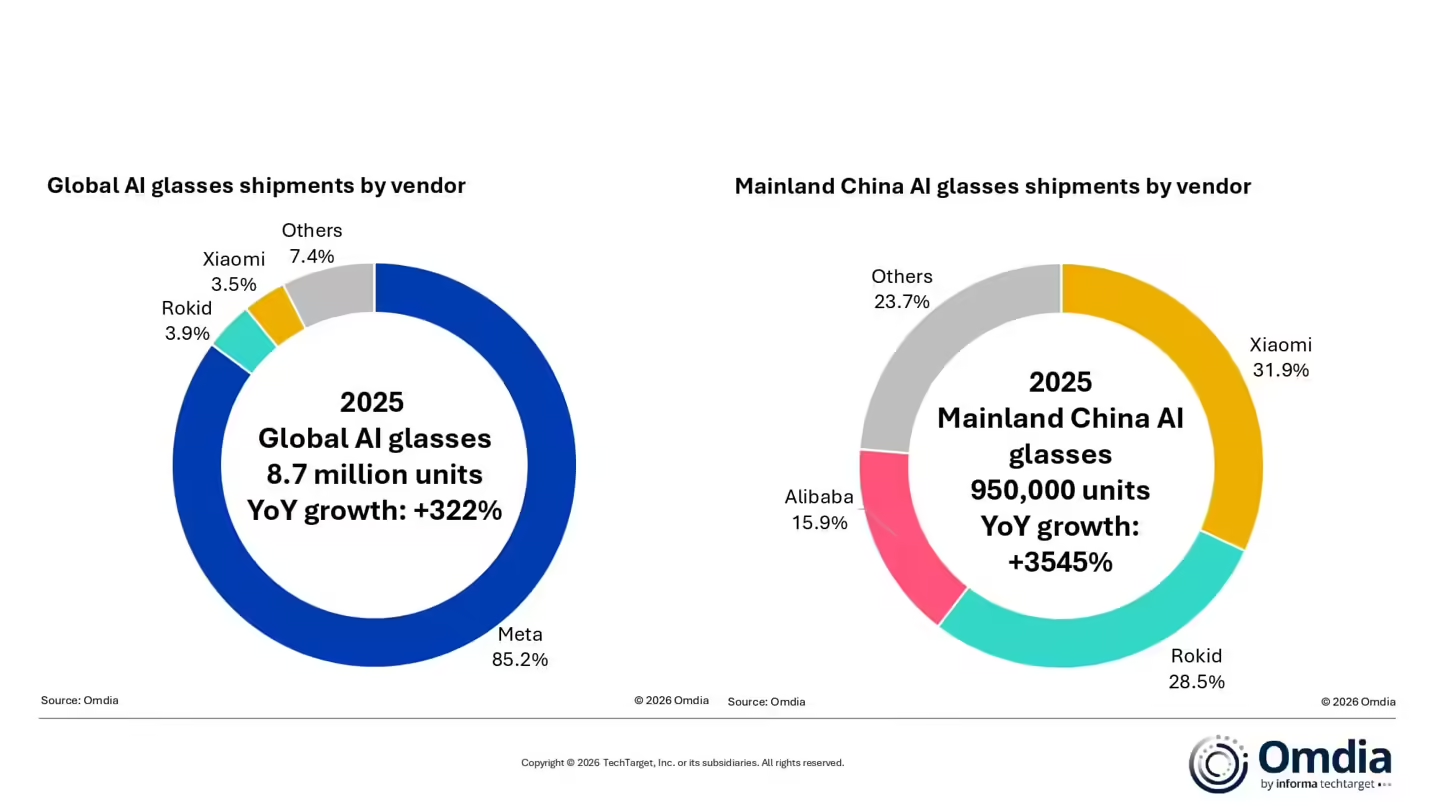
Fresh data from Omdia: In the AI+AR category with displays, Rokid has claimed the global number one spot, while also leading Chinese smart glasses sales. Global AI glasses shipments reached 8.7 million units, with display-enabled models rising from 3.3% last year to 8.4% this year - demand outstripping supply.
An even more dramatic scene: On February 26th, during German Chancellor Merz's visit to Hangzhou, he tried Rokid glasses for just 5 minutes, then immediately invited executives from Adidas, BMW, and Siemens to experience them. On the spot, seven or eight German executives placed orders.
Why? Let's break it down.
Display is King
Ask yourself: If AI can only listen and speak, what's the difference from a phone's voice assistant?
No difference.
For AI to be truly useful, it needs to "see" your world and "overlay" information before your eyes. That's the value of AR displays.
The data is clear: AI+AR glasses with displays are the main growth driver. Without vision, AI remains just an assistant; with AR displays, it achieves the complete loop of perception, understanding, and presentation.
Imagine this: You're navigating while asking about road conditions. Non-display glasses can only interrupt voice guidance; AR glasses with displays keep navigation information steadily in your field of view while simultaneously processing your voice queries. This isn't optimization of a single function, but system-level capability in scheduling strategies and interaction priorities.
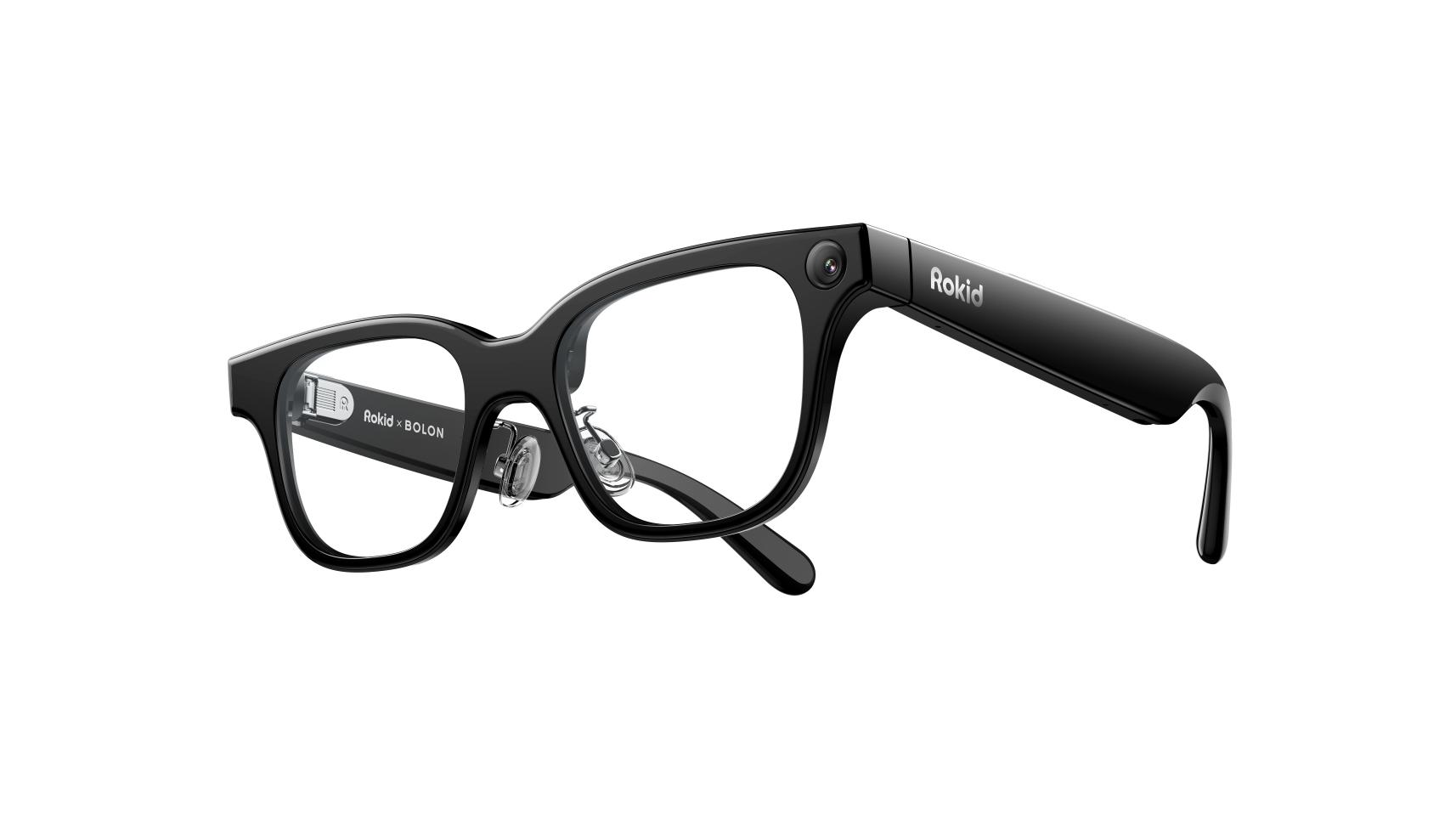
Rokid's Two Aces
Unlike companies jumping on the AI bandwagon, Rokid has focused on one thing since 2014: AI+AR. These 11 years weren't wasted.
Ace One: YodaOS Operating System
AI glasses need "system-level capabilities." An OS isn't just a container for apps - it must coordinate multi-model response priorities like a brain. Simultaneously handling environmental perception, voice interaction, visual presentation, and AI inference, while remaining real-time and cross-modal.
It's like conducting a symphony - not having instruments play solo, but having them play together at the right time with the right intensity. YodaOS is that conductor.
Ace Two: Open Ecosystem
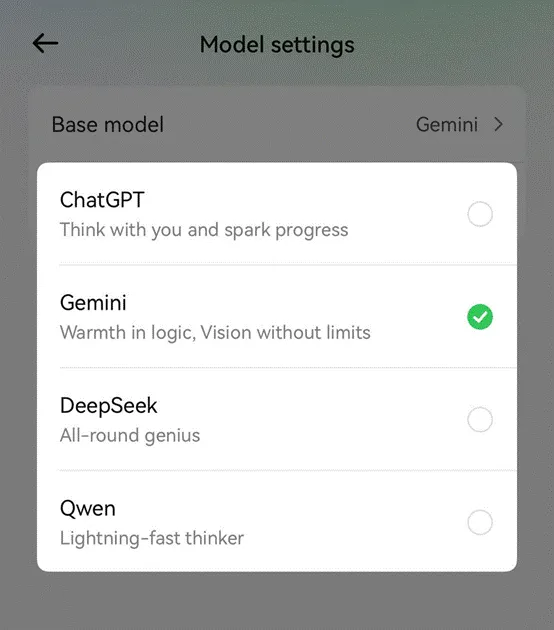
No single model can cover all scenarios; multi-model collaboration is the trend. Rokid chose a different path from Meta: openness.

Google Gemini, OpenClaw, Qwen, DeepSeek - use whoever you want. Domestic users switch between DeepSeek, Qwen, Kimi; international users choose from ChatGPT, Gemini, OpenClaw - no restrictions.
Rokid also launched an agent store, integrating high-frequency scenarios like 12306 and travel services. It's not treating AI glasses as a single assistant, but building a multi-capability aggregation platform.
Why AR is the Endgame
Look at the evolution of computing devices - each revolution is an upgrade in interaction:
- PC Era: Keyboard and mouse, interacting through a screen
- Smartphone Era: Touchscreens, direct interaction
- AI Era: Fusion of voice, vision, and spatial information
AI needs to become an "intelligent agent" that understands environments, provides real-time information, and assists decision-making. Devices can't just listen to commands; they must perceive environments, understand context, and respond instantly.
AR displays are the new screens of the AI era. This screen isn't separated from phones or computers, but embedded directly in space. It overlays information on the real world, "what you see is what you get," reducing cognitive costs and transforming AI from "passive response" to "active prompting."
Final Thoughts
Rokid's success isn't accidental. While the industry was still wondering "what are AI glasses," they bet on the endgame of "AI+AR displays."
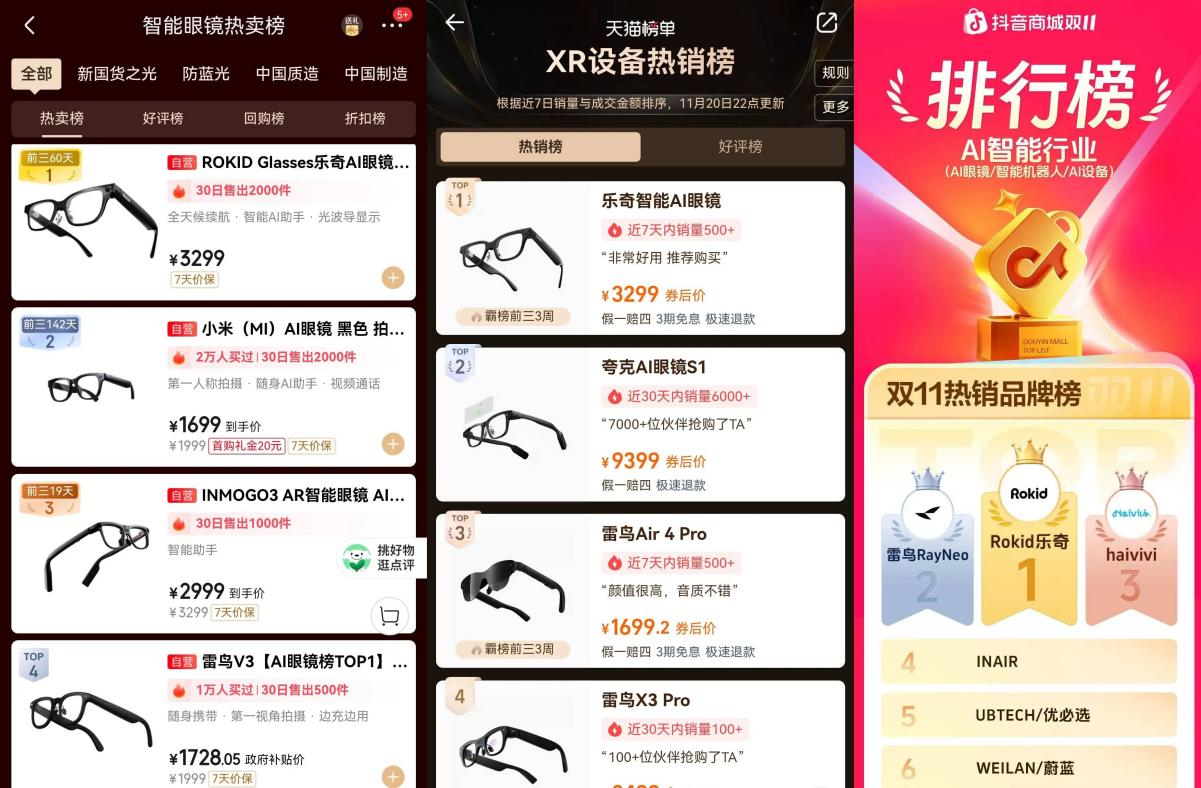
But more importantly, this means Chinese manufacturers have transformed from "followers" to "definers" in the next-generation computing platform competition.
Friends, for those still making non-display AI glasses, how much time is left in the window?
分享文章
3篇相关文章
Meta's AI Glasses Dilemma: When Your Glasses Know You Better Than Yourself, Should the Privacy Light Be On?
2026-07-30
When your glasses know you better than you know yourself, do you have a more convenient life, or deprived privacy?
Chinese AI Glasses Company Becomes Unicorn: What Does This Signal?
2026-07-09
Chinese smart glasses company Even Realities secured $150 million in funding, reaching a $1 billion valuation to become a unicorn. Led by Meituan and Tencent.
The 'Steam Engine Moment' for 3D Content Production: VAST Raised 1 Billion RMB
2026-07-02
When giants like Geely, Giant Network, and 4399 all bet on a 3D AI model startup, I think this signals something meaningful.